During our tree-planting events, the question we’re asked most often is almost always the same: “Which trees capture the most CO₂?”. This curiosity is often accompanied by a doubt: why don’t we plant very fast-growing species such as paulownia or ailanthus to maximise results?
The answer is not as straightforward as it seems. Whilst it is true that planting trees is one of the fundamental strategies for combating the climate crisis, focusing solely on the amount of carbon dioxide sequestered is a technical and strategic error. Trees are, in fact, very important; they are not mere sponges, but complex organisms within delicate ecosystems.
What is CO₂ and why is it important to absorb it?
Carbon dioxide (CO₂) is a gas that occurs naturally in the atmosphere and is essential for life. However, human activities have increased its concentration to critical levels, fuelling the greenhouse effect and global warming.
The absorption of CO₂ by trees plays a key role in combating climate change through the process of carbon sequestration. In practice, forests act as natural ‘carbon sinks’, removing the gas from the air and storing it for decades or centuries in their roots, trunks or branches.
How do trees absorb CO₂?
The driving force behind this absorption process is chlorophyll-based photosynthesis. Through their leaves, trees capture solar energy and atmospheric CO₂, combining them with water absorbed by their roots. This chemical reaction has two outcomes: on the one hand, the production of oxygen, which is released into the air, and on the other, the creation of biomass.
In this process, carbon is converted into sugars which then become wood, roots and leaves, and is literally ‘fixed’ within the tree’s physical structure throughout its entire life cycle. To better understand how this complex biological structure is organised, you can read our in-depth article on the anatomy of a tree.
Which trees capture the most CO₂?
To give a concrete figure, a tree in natural conditions absorbs on average between 20 and 50 kg of CO₂ in its first 10 years of life. But the amount of carbon is just one of the metrics to consider.
Variables affecting CO₂ absorption
Sequestration capacity is not standardised, but depends on a combination of technical variables:
species: a fast-growing tree absorbs a lot in the short term, but long-lived species (such as oaks) ensure more stable and long-lasting storage over time;
age of the plant: young trees have high growth rates, but mature trees are large enough to act as enormous reservoirs of already sequestered carbon;
environmental context: climate, soil fertility and water availability directly influence the rate of photosynthesis;
forest management: a forest that is cared for and managed using scientific methods maintains higher absorption rates than a degraded forest.
The risk of ‘high-performance species’: the tree of heaven and the case of the Dolomites
Focusing solely on growth rate can prove counterproductive, if not dangerous. There are species such as the tree of heaven (Ailanthus altissima) that grow extremely rapidly and colonise difficult terrain. However, the tree of heaven is an invasive alien species that destroys local biodiversity and even damages archaeological sites, as is currently happening in Rome at the historic site of the Aurelian Walls.
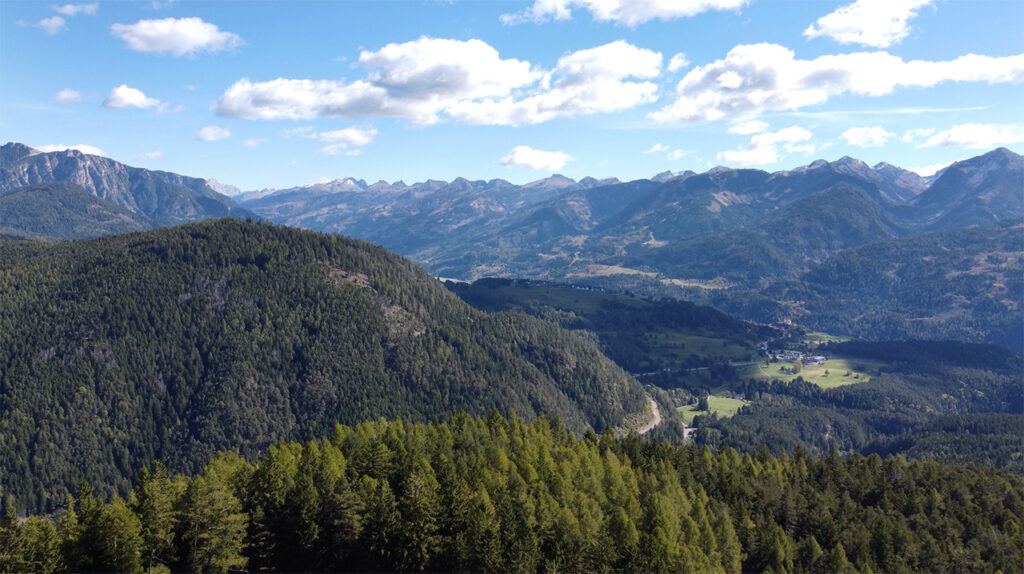
Another key example concerns the history of the Dolomite forests. In the post-war period, to restore the landscape, it was decided to plant almost exclusively spruce trees due to their productivity. The result is a monospecific forest, fragile and vulnerable, which was unable to withstand the combined impact of Storm Vaia and the bark beetle epidemic.
For us at WOWnature, effective reforestation follows the rule of ‘the right plant in the right place’, prioritising native species that guarantee long-term environmental benefits, not just short-term records.
Why it is important to plant and protect forests
If we focus solely on CO₂, we overlook the complexity of nature. These ecosystems perform a variety of functions and provide us with many benefits:
they protect the soil: their roots form a network that prevents erosion and landslides;
they regulate the climate: through transpiration, trees cool the air, combating heat islands in our cities;
they sustain life: every tree is a home for birds, insects and small mammals, ensuring the biodiversity that makes the system resilient;
they purify the air: the canopy acts as a natural filter, capturing fine particulate matter and pollutants.
Watch the video: which trees capture the most CO2? And take action
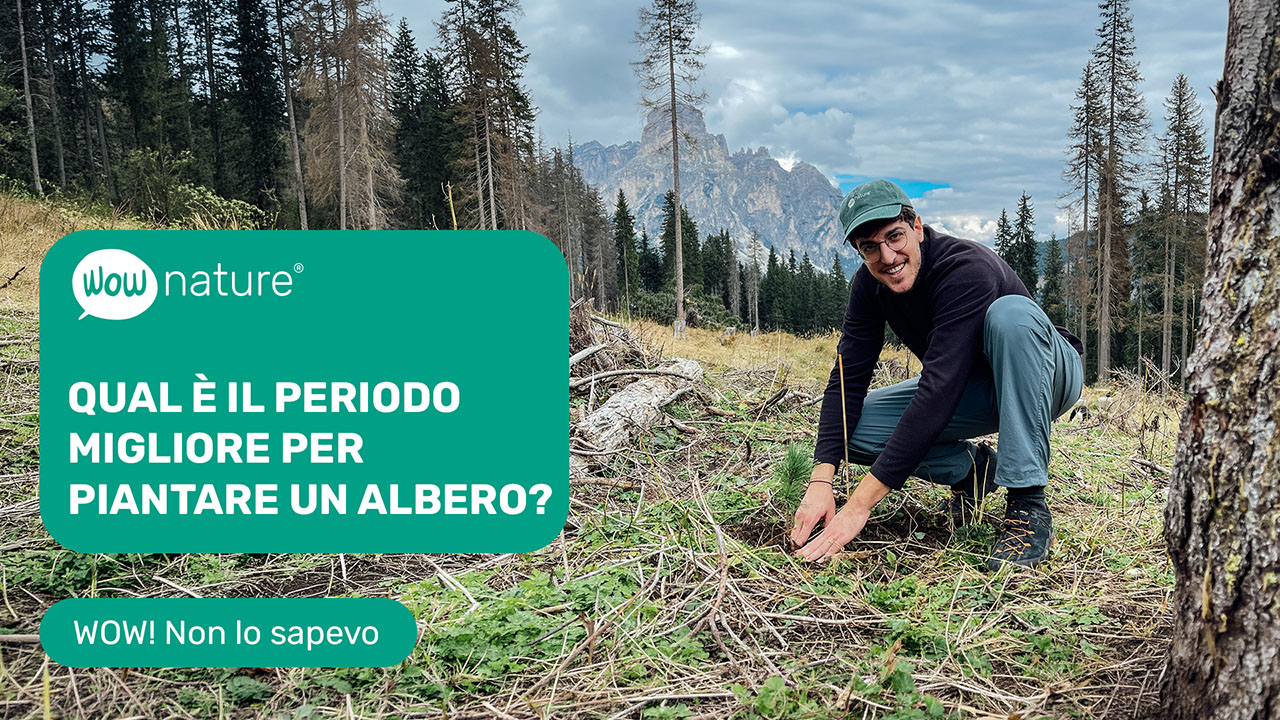
To explore this topic further and see the data compared, watch our full video “Which trees capture the most CO2?”. Understanding the difference between growth rate and resilience is the first step towards truly protecting our planet.
Next time you decide to adopt a tree on WOWnature, look beyond the carbon dioxide figures. Choosing a species means investing in a specific area and its ability to withstand the challenges of tomorrow.
Our commitment, underpinned by rigorous scientific methods, is to ensure that every plant is a piece of a larger mosaic: a diverse, strong forest capable of enduring over time. We’re not looking for speed records, but champions of survival.
Would you like to help us regenerate new forests? Choose your favourite project on our website, adopt a tree and come to the forest to plant it alongside our team. We look forward to seeing you out in the field.