November 2024 – Updates from San Lio Forest
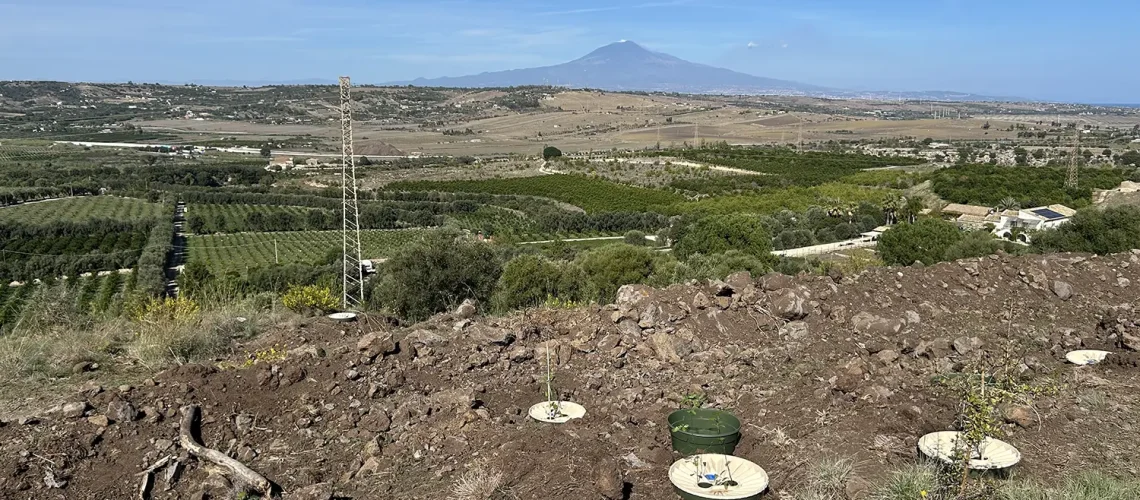
Bosco San Lio is located in one of the areas most affected by drought in recent years. To address this challenge, we use innovative tools such as the Water Box, which gradually releases water to support young plants. We constantly monitor the project, noting both positive signs and difficulties. Some species, such as pine, cypress, mastic, and Etna broom, are showing great resilience. In addition, areas with existing vegetation favor the growth of new seedlings, thanks to better temperature and humidity conditions.
Regeneration and resilience in Sicily
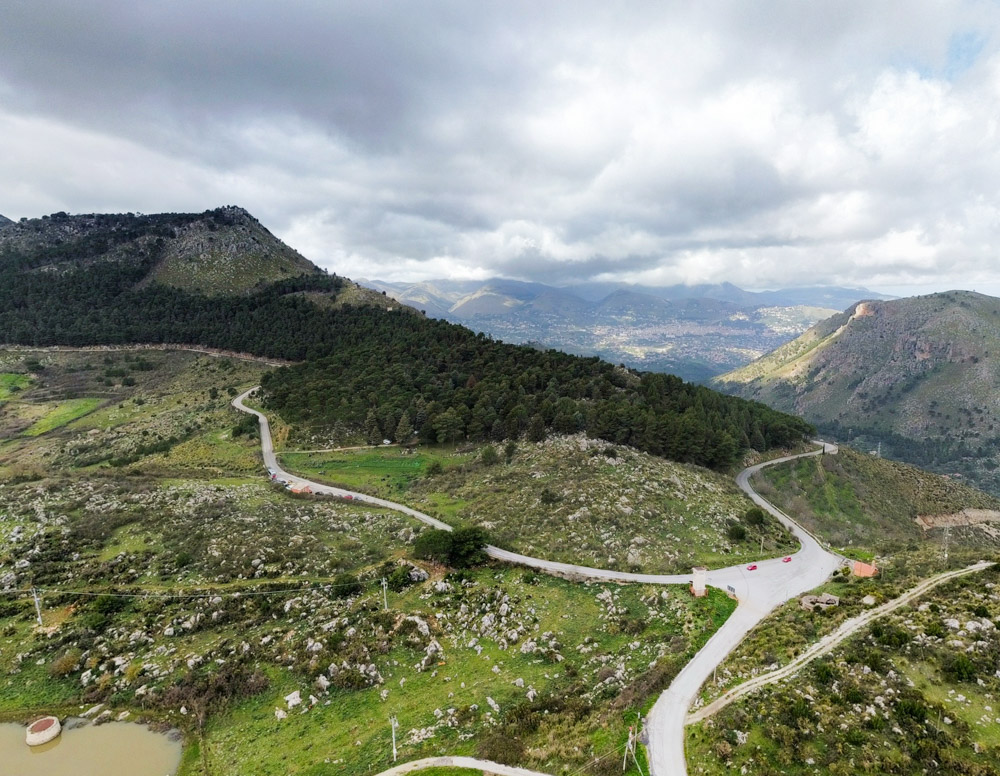
In Bosco San Lio, in the municipality of Carlentini, in the province of Syracuse, nestled among the valleys dominated by Mount Etna and citrus and olive groves, a reforestation project is underway that aims to regenerate an area once dedicated to almond cultivation. In this area of Sicily, drought has become an increasingly urgent problem, revealing the concrete effects of the ongoing climate crisis.
Technology and nature to combat drought
To combat water shortages, we are using a valuable tool: the Waterbox. This innovative reservoir, which holds 20-25 liters of water, is placed around each seedling to gradually release the water needed during the early stages of rooting. The Waterbox also collects rainwater, allowing the roots to develop deeply and thus improving the plant’s ability to survive prolonged drought.
Adaptation and learning from nature
While monitoring the plants, positive signs emerged that are guiding us towards an increasingly adaptive approach. Some species, such as pine, cypress, terebinth, mastic, wild olive, and Etna broom, have shown greater resistance to extreme conditions, growing successfully despite the drought. In addition, we have observed that plants located near existing vegetation, which provides natural shade to the soil, are more resistant thanks to lower temperatures and more favorable humidity levels.
The fight against rural fires
Another significant challenge for Bosco San Lio is rural fires, which are particularly intense during the summer months. To mitigate this risk, an agreement has been established with a local farmer who, during the summer, grazes his cows in a designated area. The animals feed on grass and dry shrubs, thus reducing surface fuel and limiting the speed at which fires spread.
Watch the video