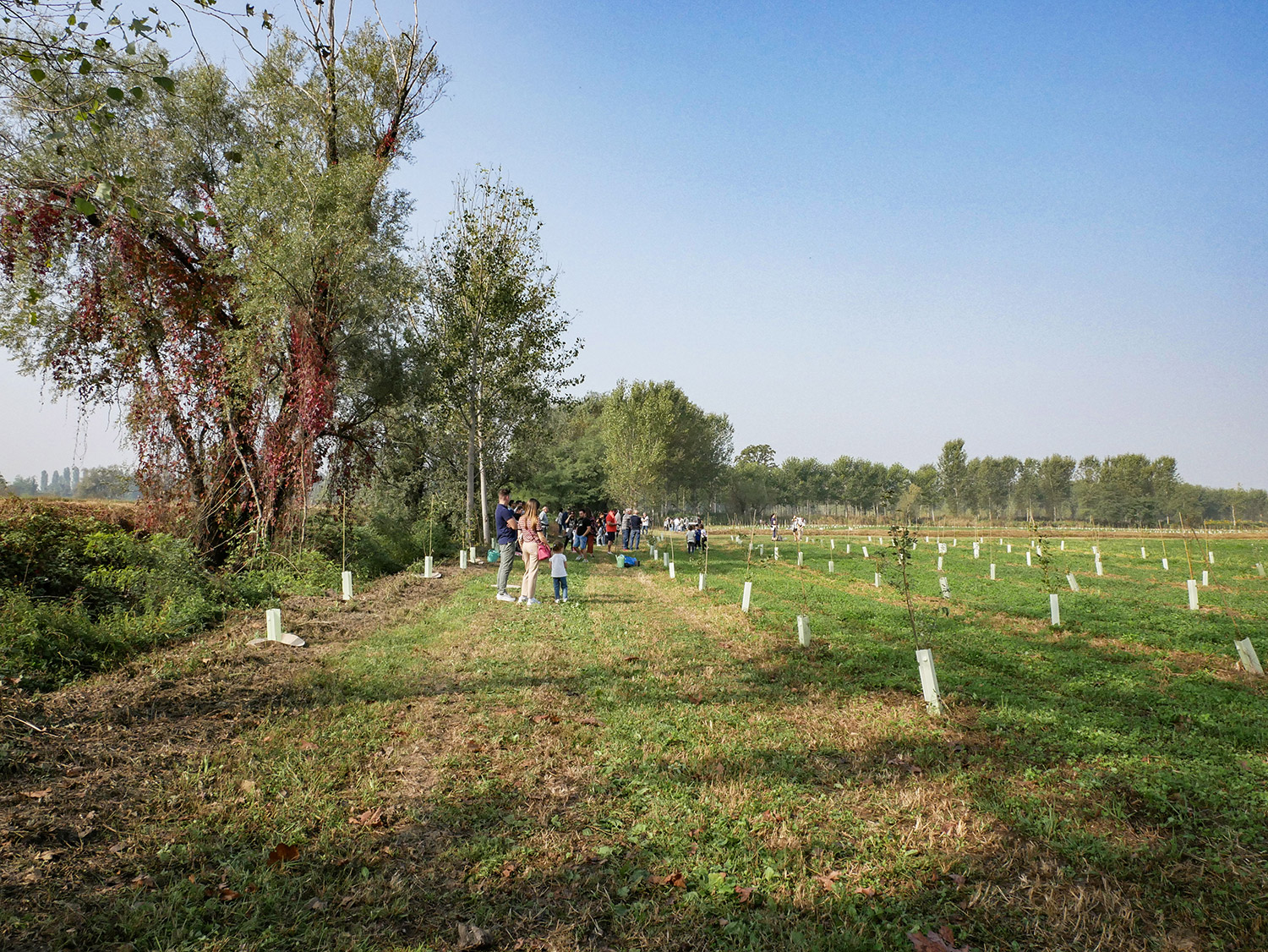
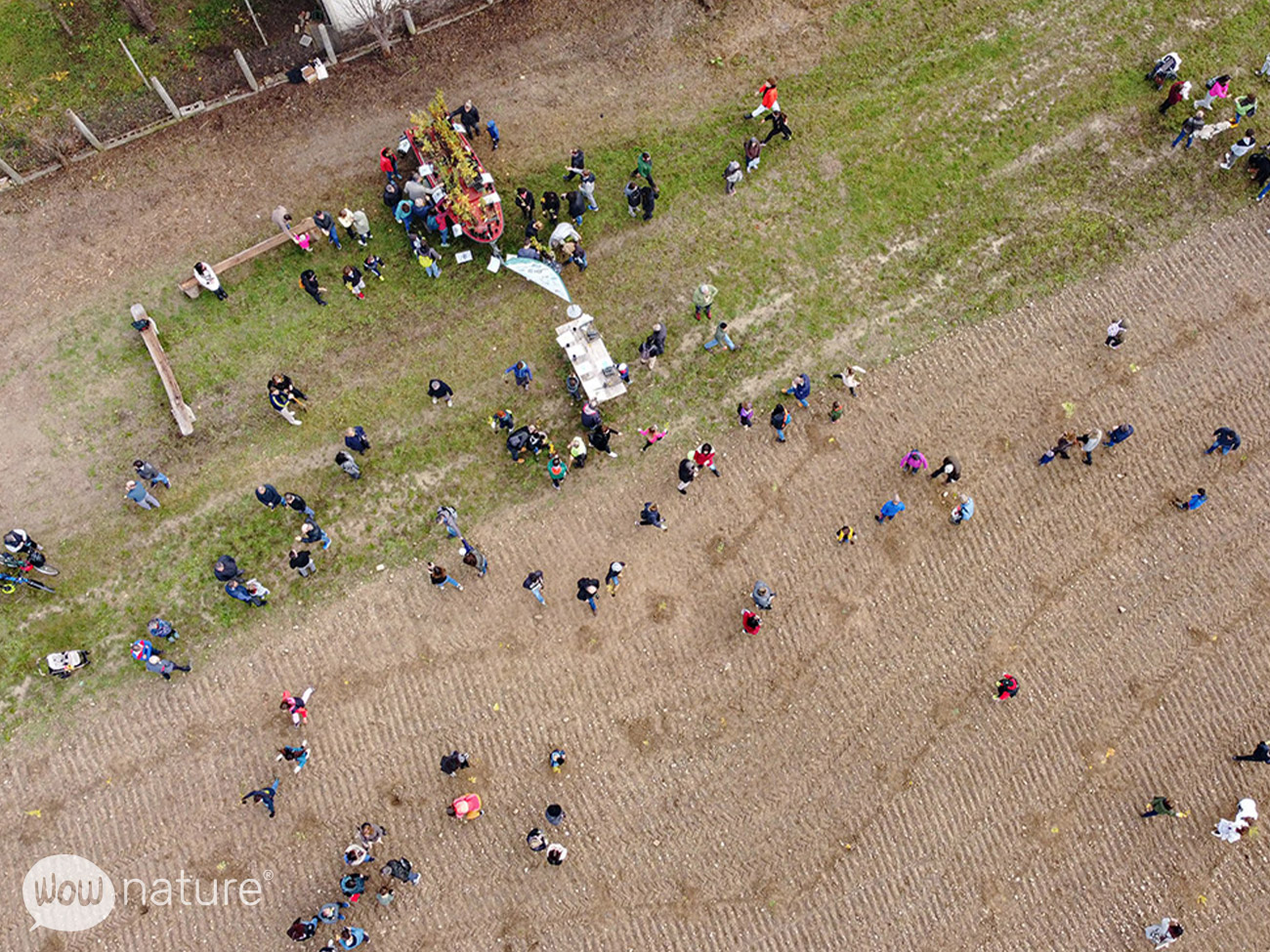
During our planting events, the question we are asked most often is almost always the same: “Which trees capture the most CO2?” This is often accompanied by a doubt: why don’t we plant fast-growing species such as paulownia or ailanthus?
Answering this question is not as straightforward as it seems. While it is true that planting trees is one of the fundamental strategies for combating the climate crisis, focusing solely on the amount of carbon dioxide sequestered is a technical and strategic error.
Trees are not simply carbon sponges: they are complex organisms that live in delicate ecosystems. The real secret to effective reforestation lies not in growth rate, but in the principle of the right plant in the right place.
How trees absorb CO2
Let’s start with the scientific basics. Trees capture CO2 through chlorophyll photosynthesis, transforming carbon dioxide into sugars (energy) and oxygen. The carbon is then stored in the trunk, roots, and leaves.
However, the sequestration capacity is not standard, but depends on a mix of variables:
Species: a young, fast-growing tree absorbs a lot of carbon in the short term, but in the long term it is the long-lived and large species that ensure stable and lasting storage.
Environmental context: climate, soil fertility, and water availability directly influence the rate of photosynthesis.
Forest management: a forest that is cared for and managed scientifically maintains higher absorption rates than a degraded forest.
To give a concrete figure, a tree in natural conditions absorbs on average between 20 and 50 kg of CO2 in the first 10 years of its life. But the amount of carbon is only one of the metrics to consider.
The risk of high-performing species
Focusing exclusively on growth speed can prove counterproductive, if not dangerous. There are species such as the tree of heaven (Ailanthus altissima) that grow very quickly and colonize difficult terrain. However, the tree of heaven is an invasive alien species that destroys local biodiversity and even damages archaeological sites, as is happening in Rome at the historic site of the Aurelian Walls.
Another key example concerns the history of the Dolomites. After the war, it was decided to plant almost exclusively spruce trees because of their productivity. The result is a monospecific, fragile, and vulnerable forest that was unable to withstand the combined impact of Vaia storm and the bark beetle epidemic.
Choosing native and diverse species is the only strategy for creating resilient forests capable of withstanding climate change and pests.
Beyond CO2: ecosystem services
If we only look at CO2, we ignore the complexity and beauty of nature. A healthy forest is not just a carbon sink, it is a tireless guardian of our land.
While we live our lives, these ecosystems work silently for us:
They protect the soil: roots form a network that prevents erosion and hydrogeological instability.
They regulate the climate: through transpiration, trees cool the air, combating heat islands in our cities.
They preserve life: every tree is a home for birds, insects, and small mammals, ensuring the biodiversity that makes the system resilient.
They purify the air: the canopy acts as a natural filter, capturing fine dust and pollutants.
We regenerate resilient forests
The next time you decide to adopt a tree on WOWnature, look beyond the carbon dioxide figures. Choosing a species means investing in a specific area, its history, and its ability to withstand the challenges of tomorrow.
Our commitment, supported by rigorous scientific methods, is to guarantee that every plant we put in the ground is a piece of a larger mosaic: a diverse, strong forest that will stand the test of time.
For us, one fundamental rule is: the right plant in the right place.