


Updates from Bosco delle Vigne
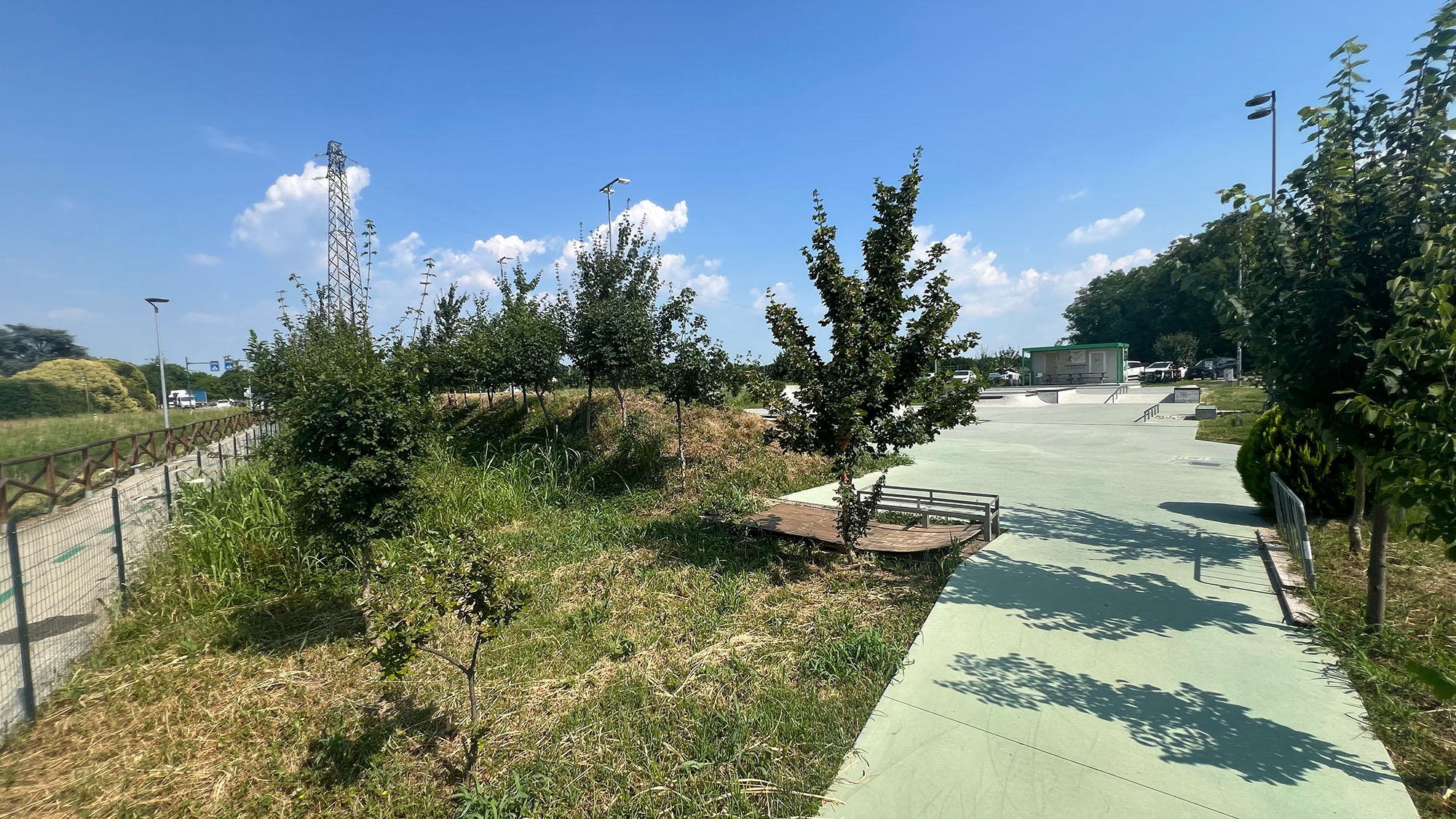
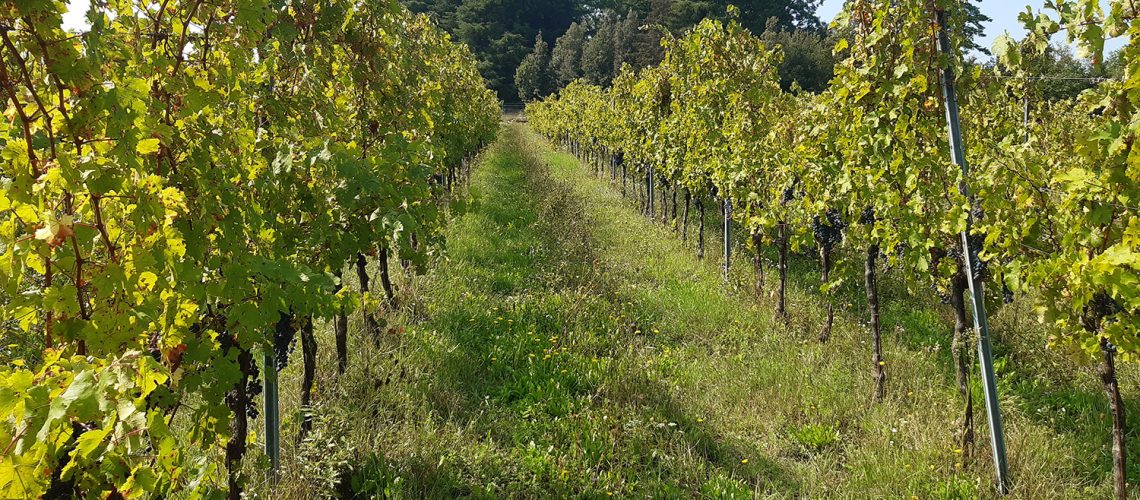
In the heart of the Colli Berici, in Arcugnano, we have launched an agroforestry project. Among vines, hedgerows and old paths, we are combining traditional and modern techniques. At Bosco delle Vigne, the goal is to revive the vite maritata (the “married vine”), an ancient farming practice, and turn it into an innovative reforestation tool.
April 2025 – How Bosco delle Vigne is growing
Two years after the first plants were put in the ground at Bosco delle Vigne, we can see that they are growing vigorously. In the video you can see a blackthorn that has already grown taller than the grass and allows the vine to climb up its branches.
November 2023 – First updates from Bosco delle Vigne
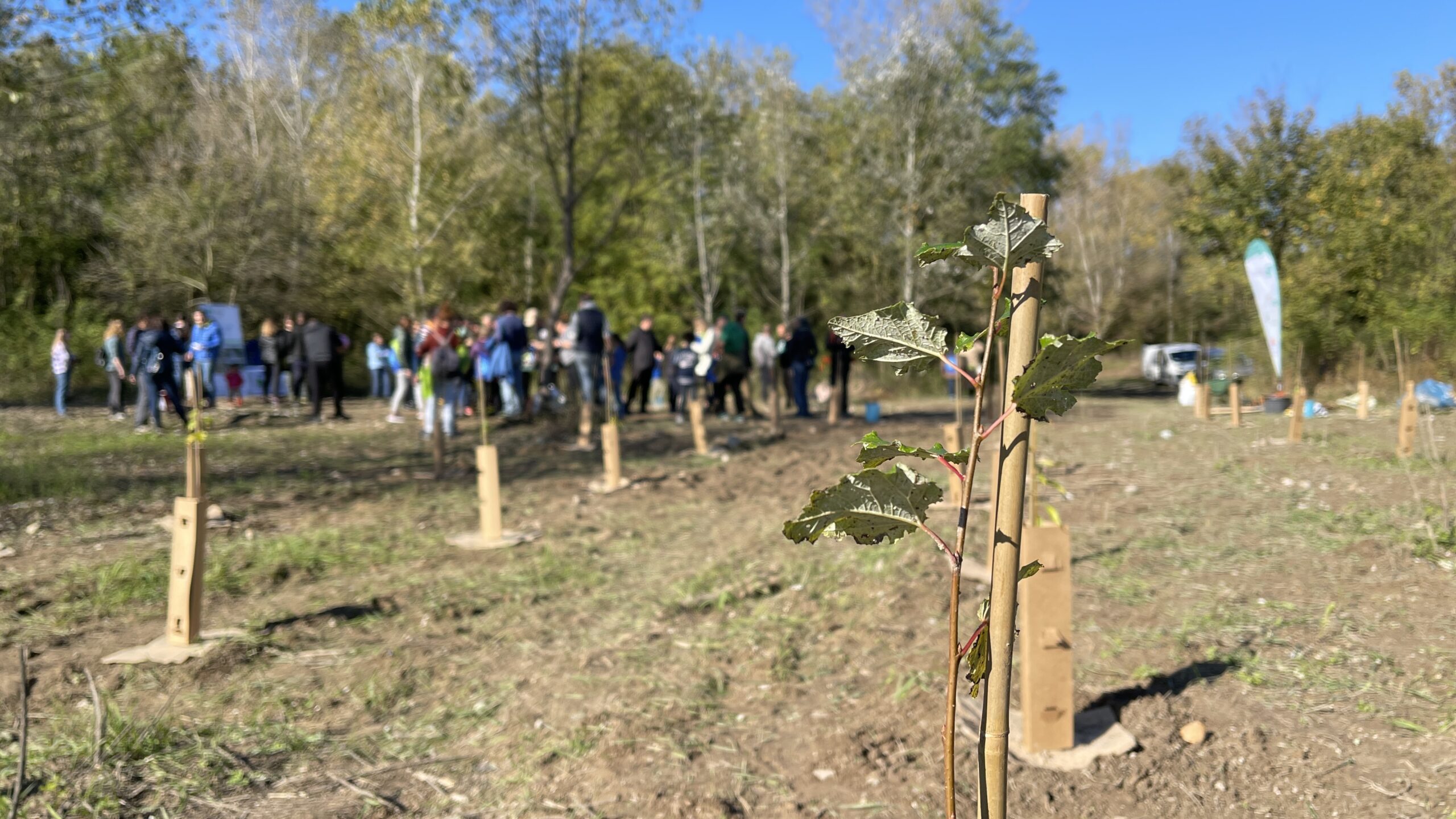
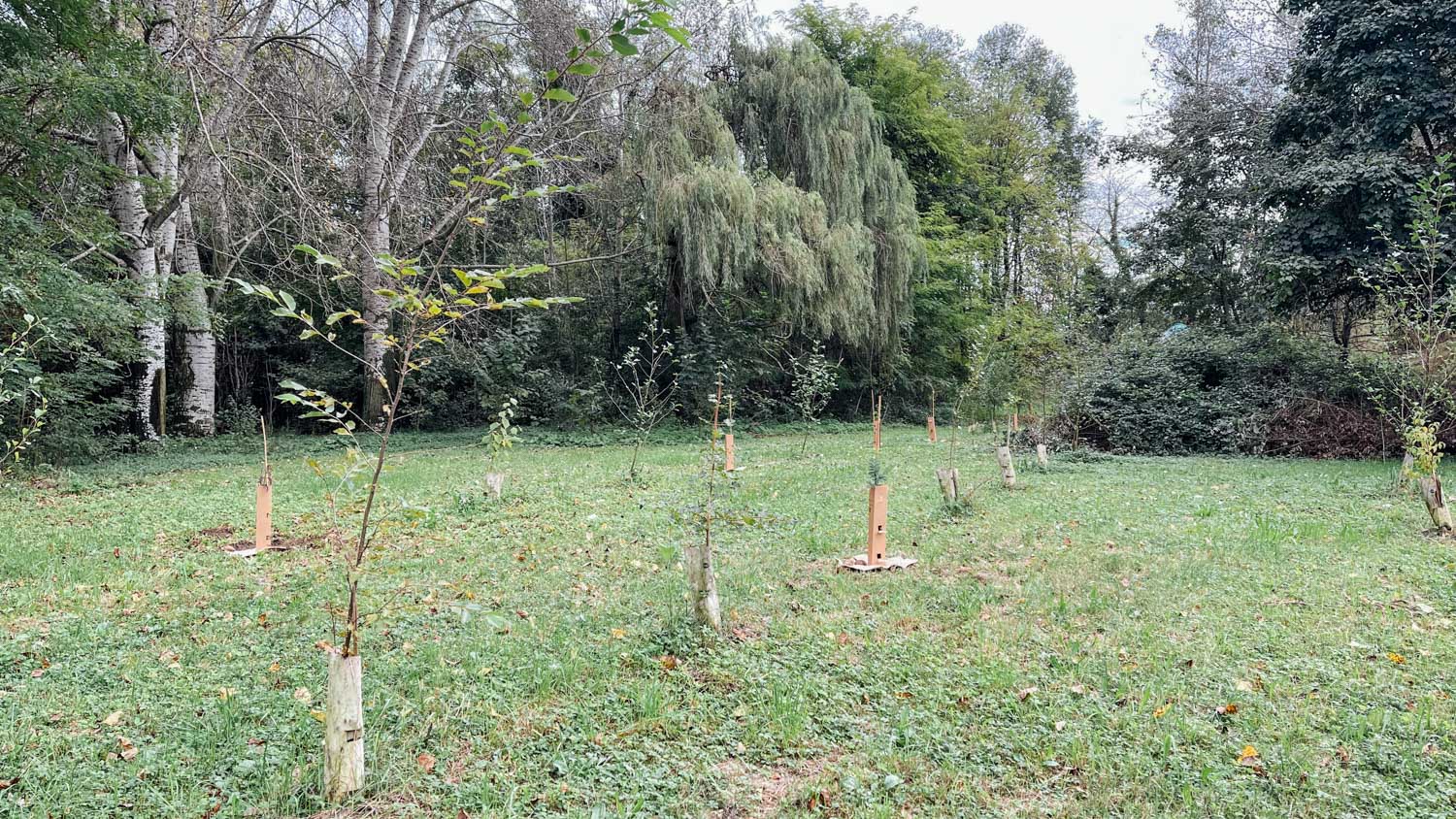
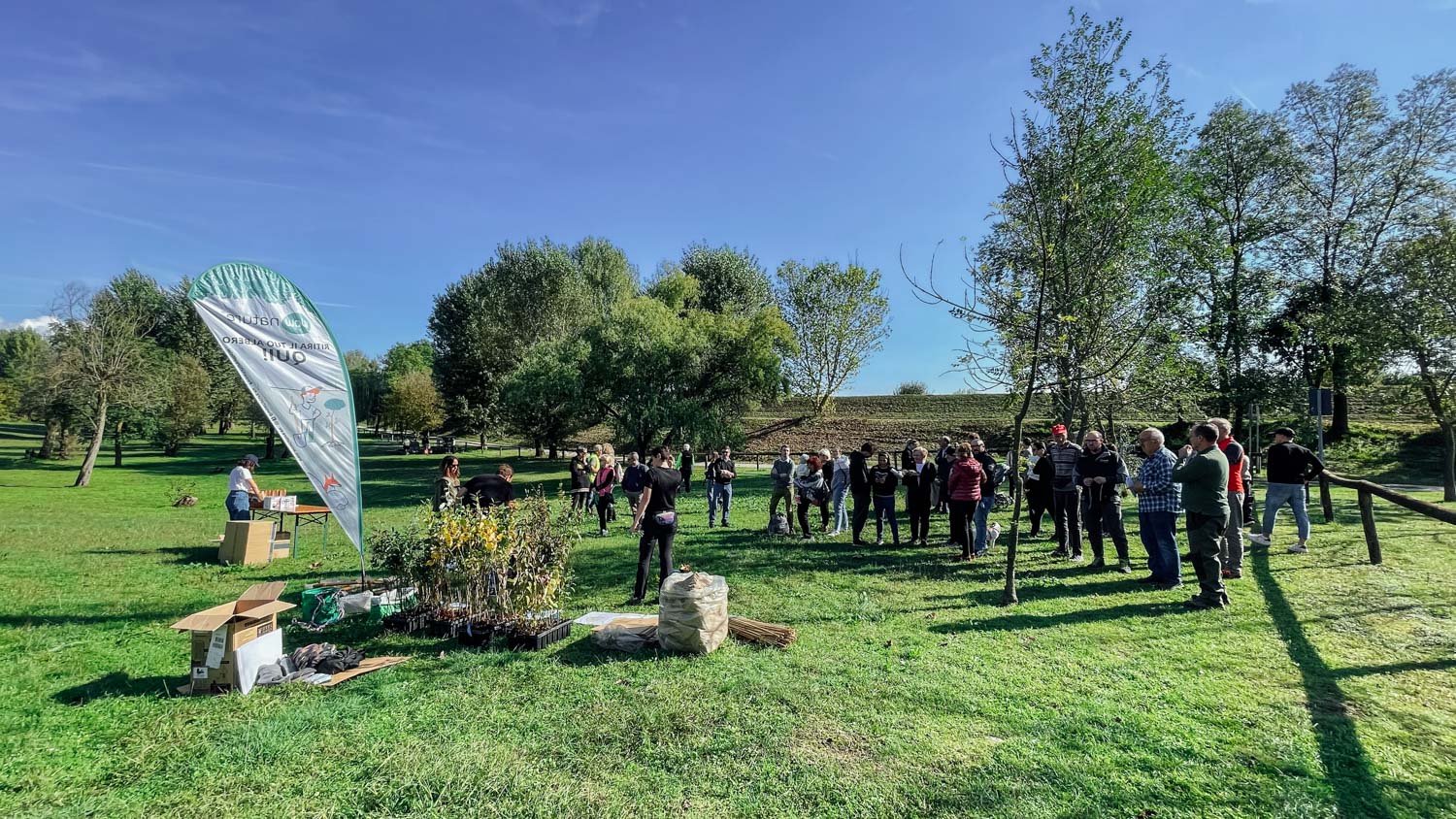
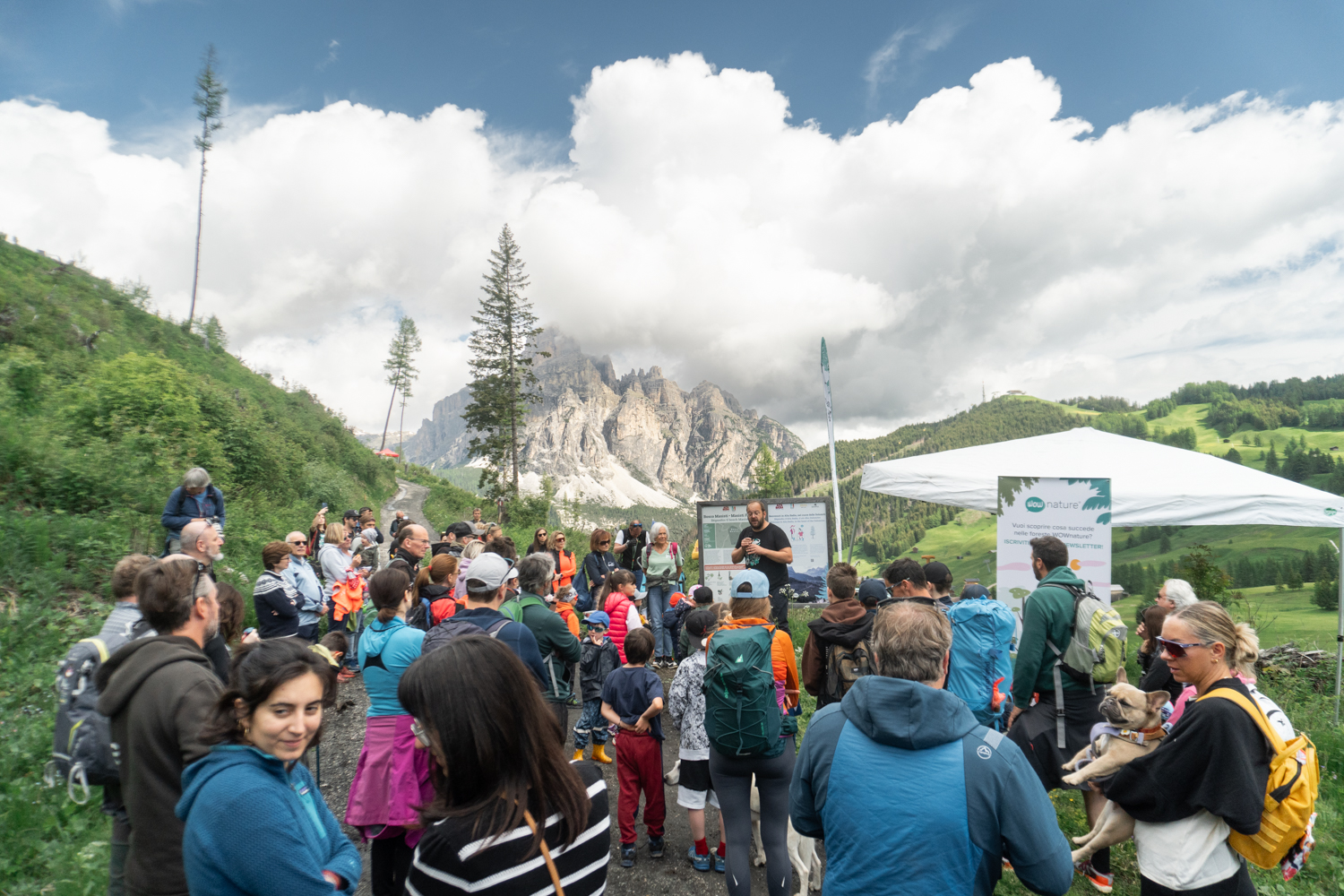
In April 2023 we planted the first trees at Bosco delle Vigne. Seven months later, we check on the growth of the trees adopted by companies and citizens. As the video shows, the plants are in excellent health and passed the summer season brilliantly, thanks also to the abundant rainfall. In autumn, the plants are entering vegetative rest, the autumn-winter dormancy season, during which the leaves turn yellow and then fall, to recover in spring. In the meantime, all the seedlings have deepened their root systems: this anchors them firmly to the ground and makes them sturdy enough to withstand any water stress in the coming summer season.
What is the vite maritata: a farming technique from the past to the future
In the middle of the Colli Berici, WOWnature chose to rediscover a traditional farming practice: the vite maritata (“married vine”). This technique involves the planting of the vine next to a taller tree that acts as a natural support for its growth.
Unlike modern vineyards supported by artificial poles, here the vine climbs native tree species, such as blackthorn, creating a plant “marriage” that enhances the interaction between plants.
History of the vite maritata or piantata padana
A few decades ago vineyards as we know them today did not exist: the vine was part of a “heterogeneous system” in which grapes were not the only fruit grown and harvested. Known in history as the “piantata padana”, this system consisted of placing, at the edges of land used for growing cereals, vines that were “married” to trees such as elm, field maple, willow, poplar and mulberry, but also to some fruit trees, such as cherry or pear. The piantata padana has practically disappeared from the landscapes of the Po Valley, but this system has a very ancient history.
The ethnographic museum of Stanghella holds a document of inestimable value that tells the story of the Bassa Padovana: the “Map of the Retratto del Gorzon”. It is an imposing cadastral map made in the sixteenth century on behalf of the Serenissima Republic of Venice, still perfectly preserved, which “photographs” the territory from Montagnana to Anguillara Veneta before the Venetian land reclamation of the 1500s and describes in detail the various crops, the vast lakes, the marshes and the villages that were part of the Po Valley territory.
The great “Gorzon Map”, despite its four hundred years of age, accurately represents the hydrography and land use of that time; when it was not covered by water, the land was mostly devoted to viticulture, covering almost 30% of the entire territory then available, that is, almost four times the land devoted to cereal crops. Consider this: today, in the same area covered by the map, the surface devoted to viticulture represents only 0.81%.
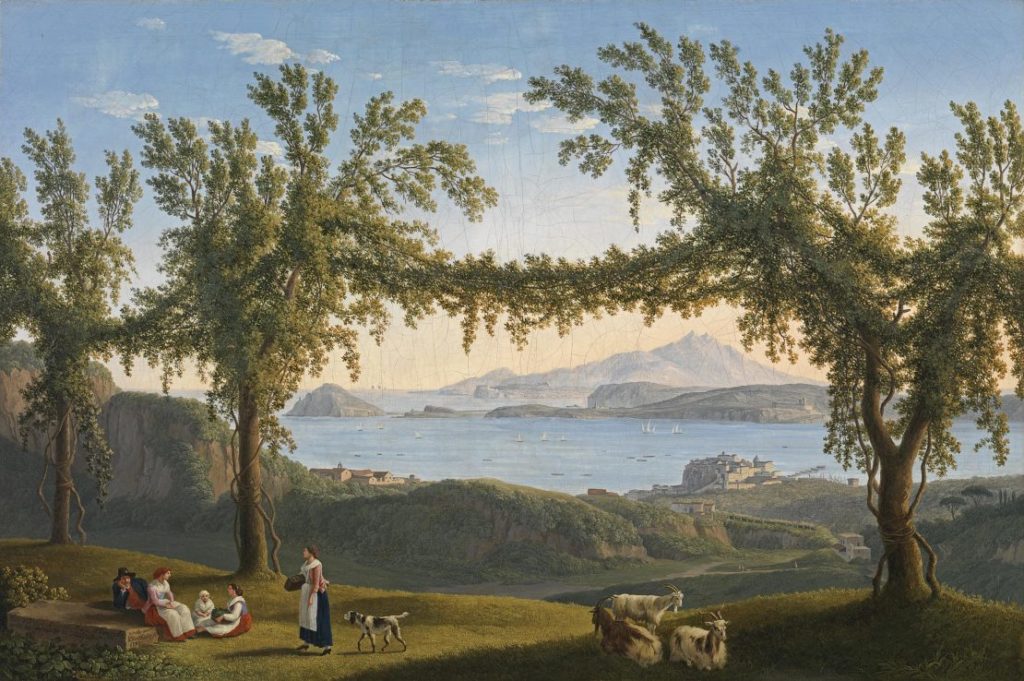
But the origins of the vite maritata date back more than 3,000 years, to the time of the Etruscans, who cultivated vines as they saw them growing spontaneously in the woods. The vine is a climbing shrub, a kind of “liana”, and in a forest, its natural environment at our latitudes, it tends to climb a tree to reach as much light as possible. It is not, however, a parasitic species: the vine does not interfere with the tree it clings to. We find evidence of the piantata padana in later periods too: from the Roman Empire, through the Middle Ages and up to the present day. Evidence that we find in numerous artworks and paintings of every era and of various artistic movements.
Trees “married” to the vine
The trees most commonly “married” to vines could belong to the sweet species, as well as to those known as strong. The first group included fast-growing plants suited to cool soils, such as the salgàro (white willow) and àlbare and pògolo (poplars). The willow, if on the one hand it developed few roots, on the other it tended to form a rather broad crown, which nevertheless had to be contained by pollarding; moreover, it was believed to give the grapes an unpleasant taste as well, called “da salgarìn”.
The strong species included the elm, the òpio (field maple), the orno or altàn (manna ash). A group apart was formed by the moràro or morèr (mulberry), especially the white one, and the nogàra or noghèra (walnut), as these are fruit trees. As possible “husbands” there were also, albeit rarely on the plain, unlike the hills where they were frequent, other fruit trees, such as the amolàro (domestic plum), the sarezàra (sweet cherry) and marinelàra (sour cherry) and a few others.
The arrival of “modern” agriculture and the disappearance of the vite maritata: deforestation and land reclamation
The works of deforestation and land reclamation carried out from the twelfth century onwards slowly caused the almost complete disappearance of the vite maritata system , which nevertheless remained in use until recent times. Some blamed Dutch elm disease for the disappearance of the “piantata”; in reality, the introduction of ever more modern agricultural machinery is the real reason for the decline of this crop. The need to work the land with ever larger and more powerful machines led to the removal of the “obstacles” constituted by the trees married to the vine, while the increasingly widespread use of artificial feed made the production of leaves and grasses, once essential for raising animals, pointless. Agricultural machinery and tractors thus began to change our landscape, which underwent a radical transformation; in the Bassa Padovana it is still possible to come across a few examples of “piantata padana”: a few remnants that should be considered on a par with a work of art, a monument to that peasant craftsmanship that knew how to use rational systems for land use and crops.
SHARE
Other posts