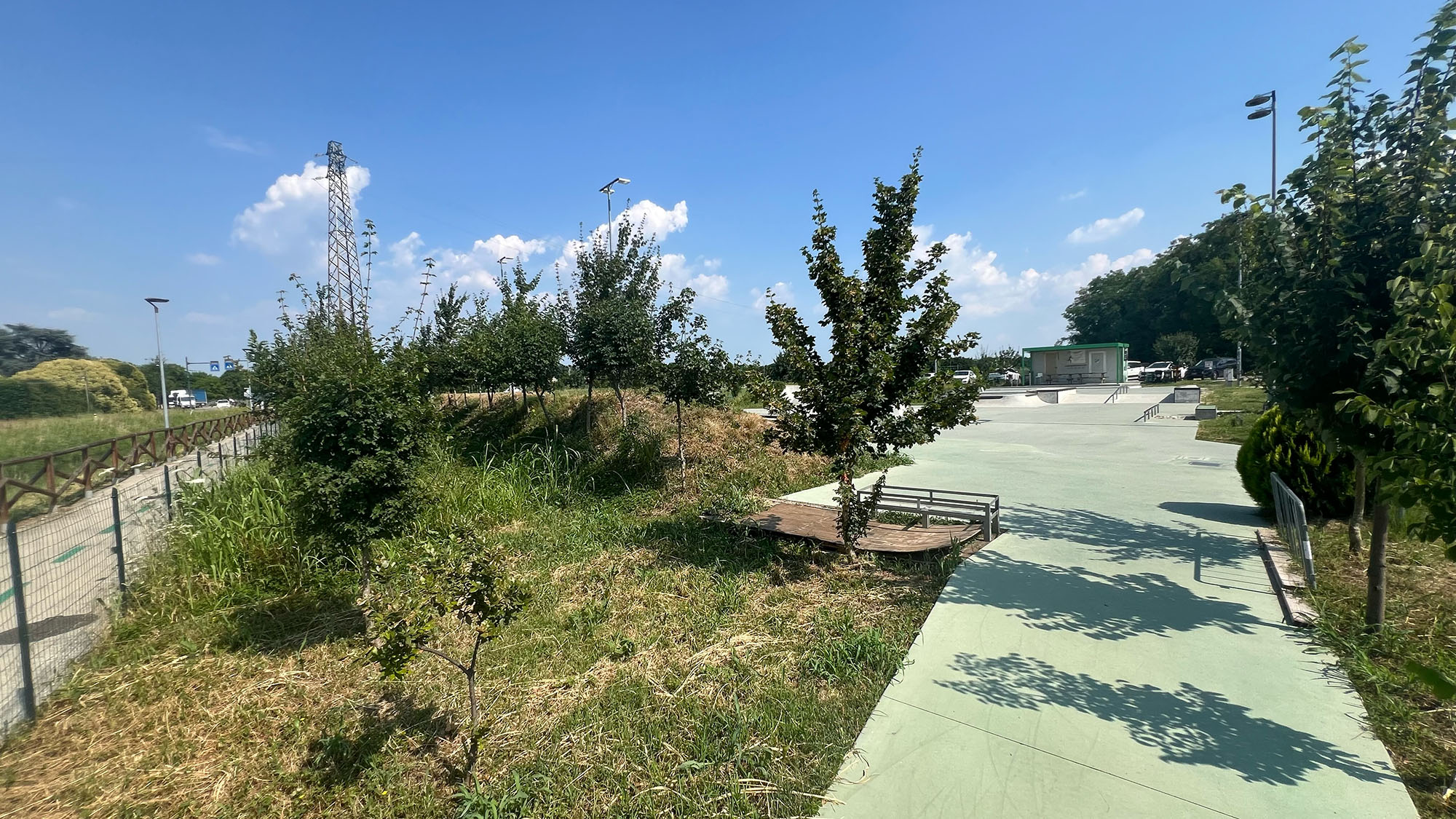
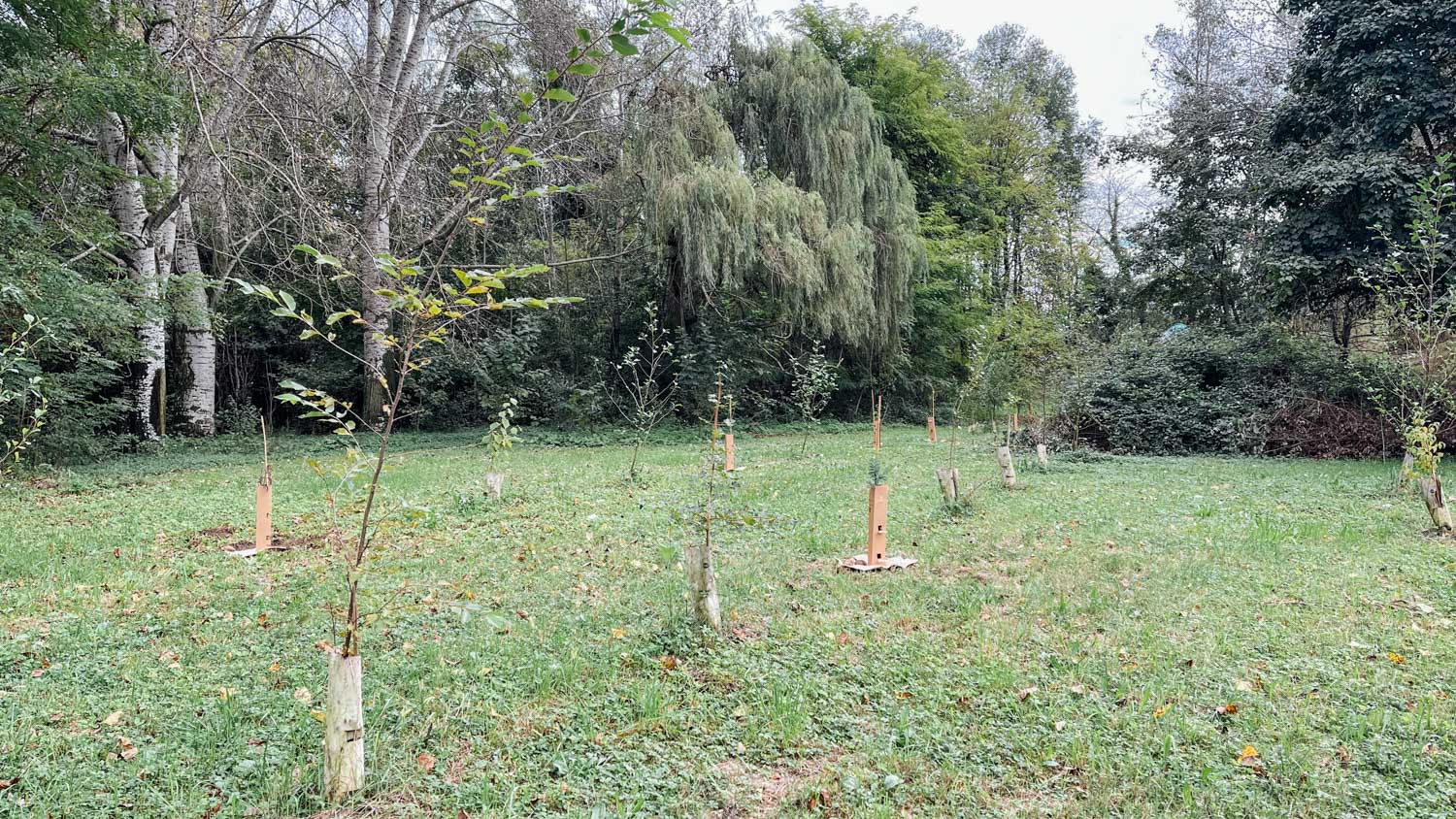
Six years after the trees were planted in Bruzzano, the urban Food Forest is completing its establishment phase, showing excellent growth in height and diameter with an almost zero percentage of dead trees. Constant summer maintenance, including mowing and emergency irrigation, has allowed the plants to consolidate and show off all their biodiversity: in this autumn season the red berries of hawthorn and dog rose stand out, valuable both for us people and for wildlife.
The edible forest has become a living refuge in the heart of the city, filling up with animals such as squirrels, jays and hares. Moreover, since it is a highly urbanised setting, during the recent monitoring we started collecting data to estimate a new and fundamental benefit of the Food Forest: its ability to remove the main air pollutants and produce oxygen for the community.
Watch the update video
October 2023 – Updates from Parco Nord Milano
The Food Forest is growing and consolidating its benefits for nature and people. The plantings, arranged in groups of single-species stands, include plants that help feed people and animals, such as fig, jujube, medlar, dogwood, mulberry, and hazel.
This season’s monitoring shows that the plants have developed well, thanks in part to the shade provided on the south side by existing plane trees, which helps them withstand the intense summer heat. Despite recent years of drought, the survival of the species has been ensured by constant emergency watering, combined with maintenance efforts to remove weeds that would create competition.
Watch the update video
November 2020 – Updates from Parco Nord Milano
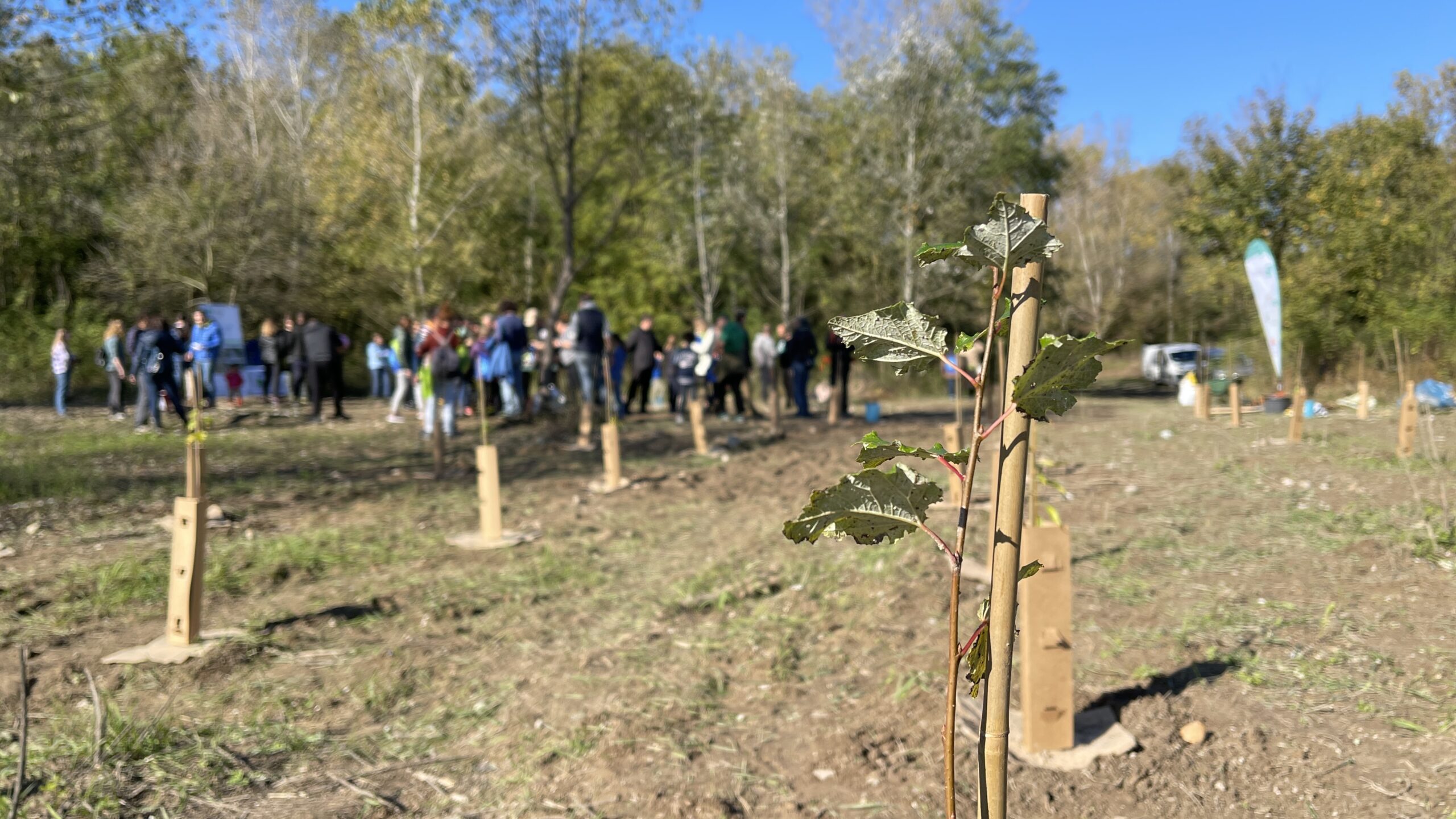
We have begun planting the first Food Forest at Parco Nord Milano: a forest designed to be “good” not only for biodiversity and wildlife, but also for people. The project involves planting 2,000 trees selected from various edible species: medlar, mulberry, jujube, and fig, whose fruits can be eaten fresh, as well as elderberry for processing and hazelnut for honey and pollen production.
The initiative is part of a broader expansion of the park, which aims to integrate nature and the city through forest management and FSC certification. Planting is carried out using specific techniques to ensure successful establishment: from the use of compost to enrich the soil to the installation of essential accessories such as biodegradable mats to control weeds and protective covers for the trunks against rodents and brush cutters.
This forest is not just a number of trees, but a place for the community to enjoy where, in a few years, people will be able to harvest the fruits during special events, rediscovering the profound value of trees and their harmonious relationship with the community.