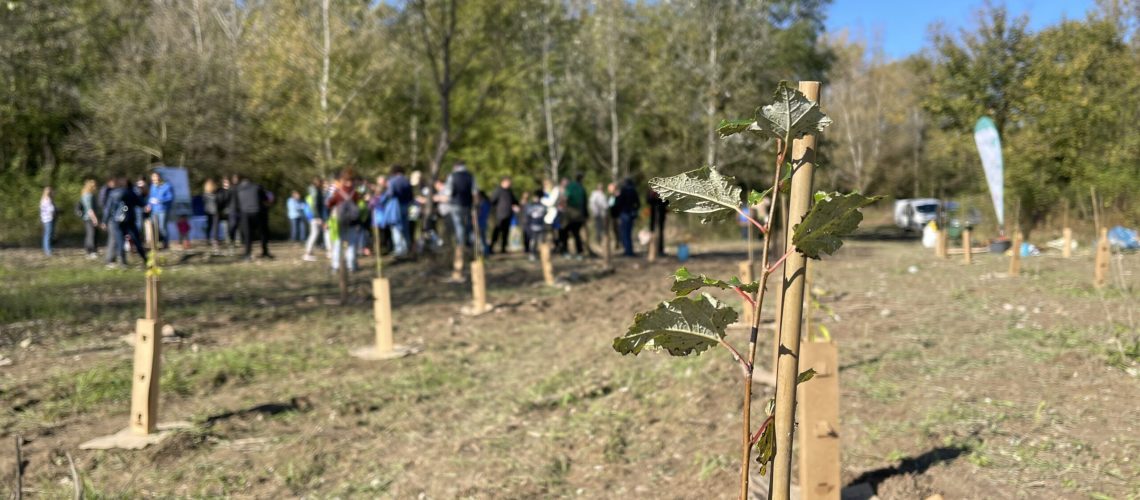
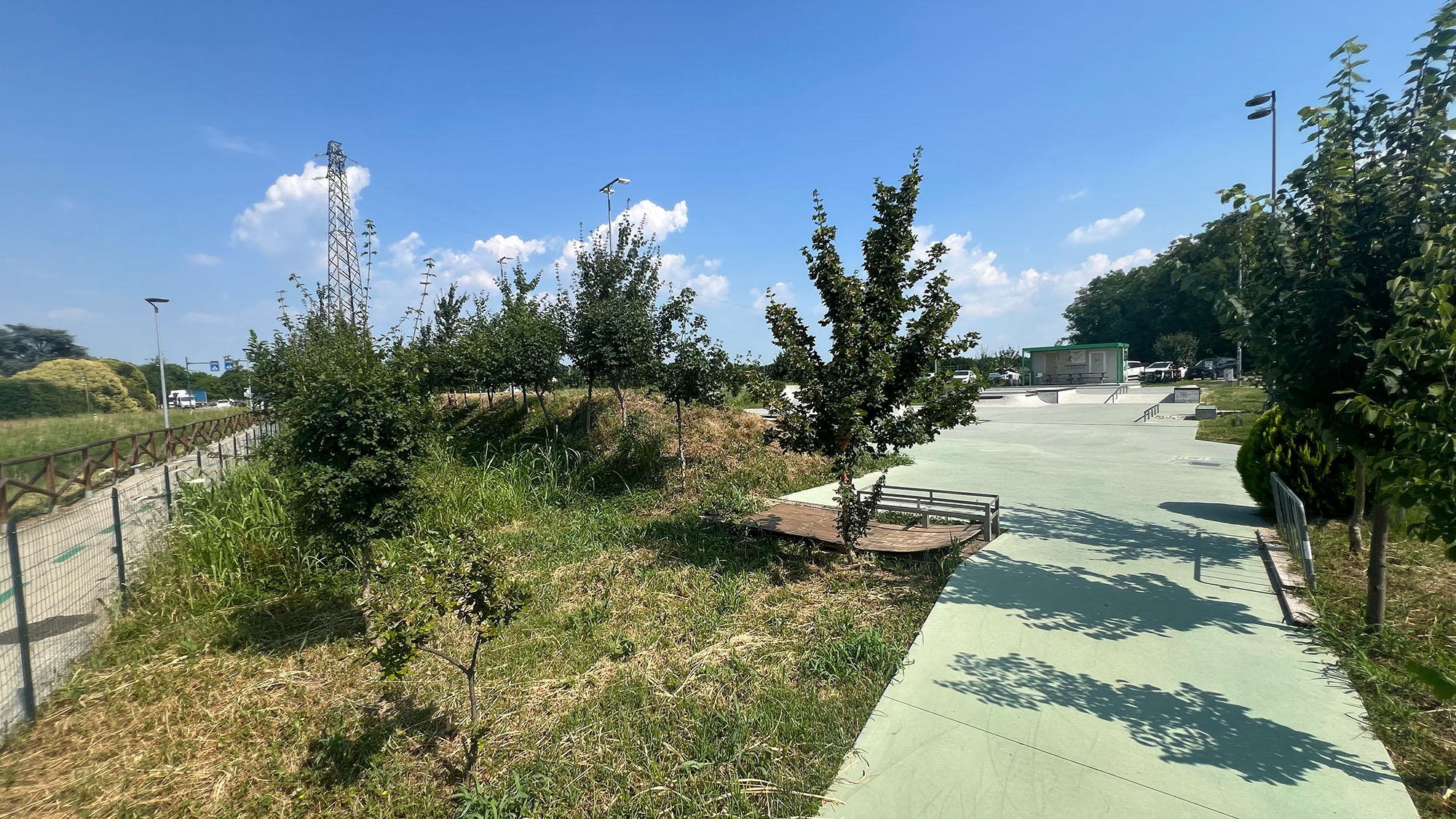
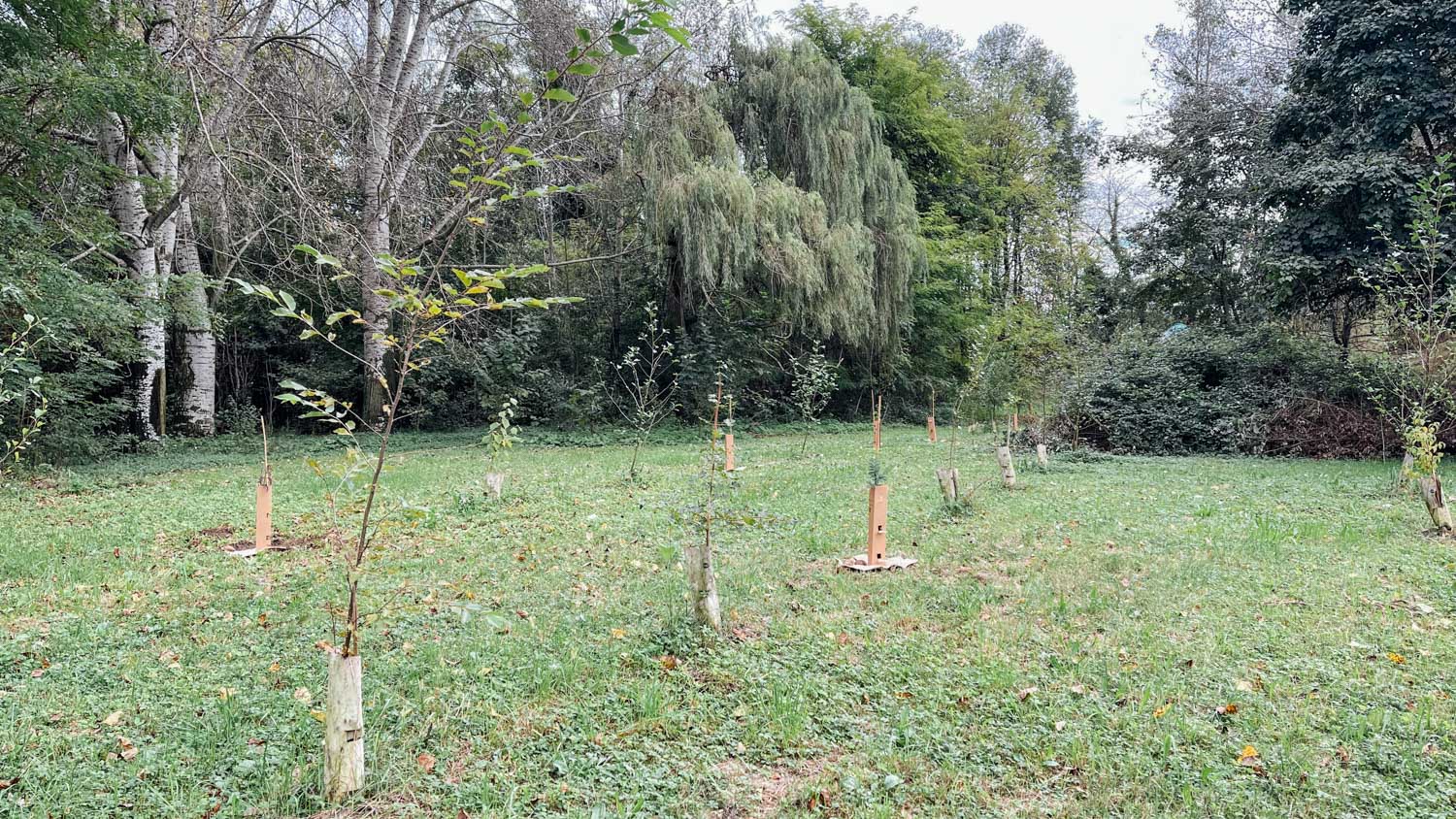
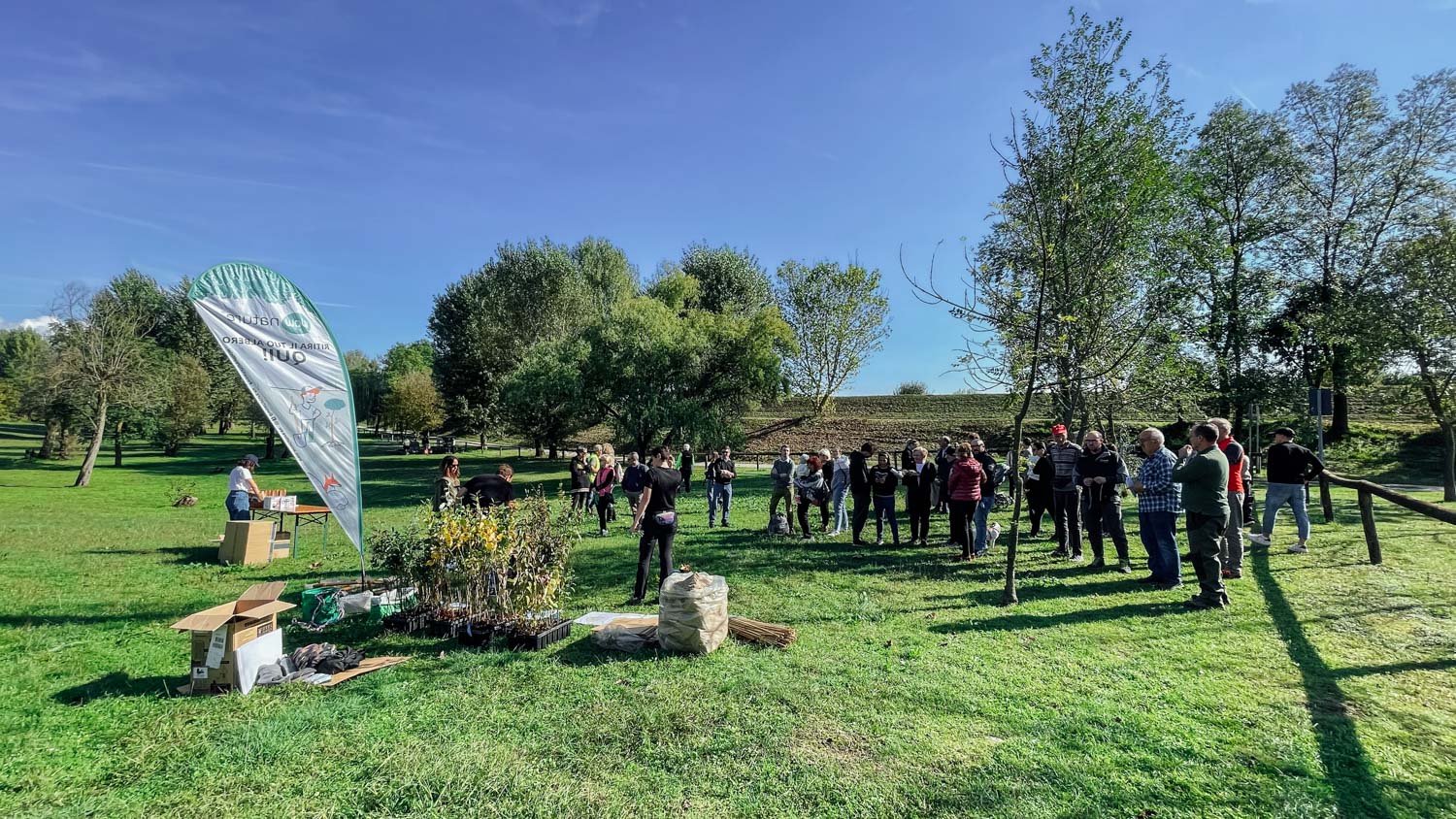
Two years on from the initial work, the area is no longer just a forestry site, but an ecosystem that is demonstrating its full potential for development along the banks of the Brenta river.
Growth exceeding expectations
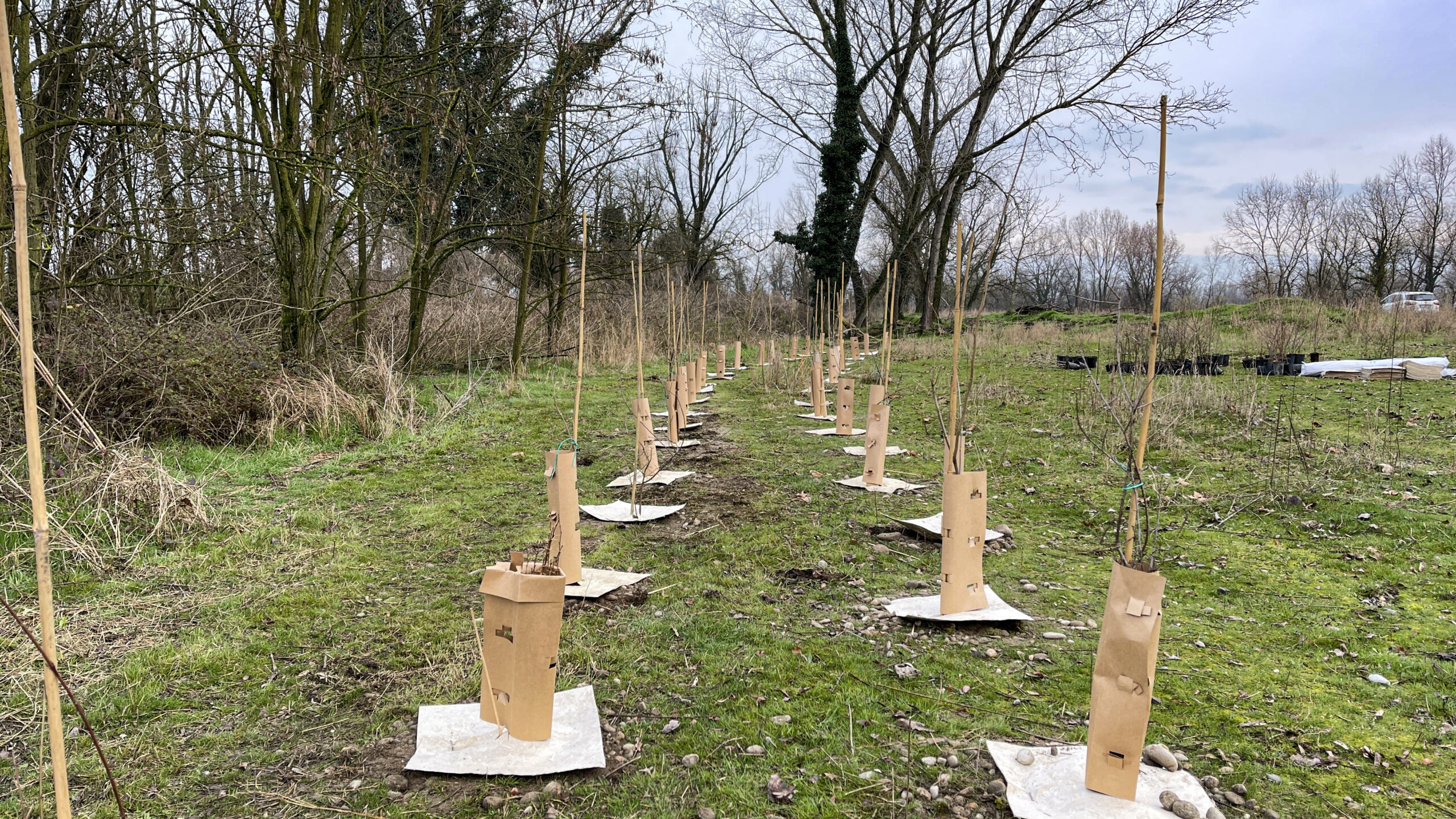
Monitoring this spring has revealed surprising data: where the soil is deeper and there is less gravel, the plants planted in 2023 and 2024 have shown an excellent response. This development is evident in the willows, which have already reached two metres in height, exceeding the typical growth rates for the species thanks to the excellent soil moisture levels.
Bank stabilisation
In areas with more stones, the roots struggle more. Here, our strategy involves temporarily leaving the grass tall: the shade protects the soil from the sun and reduces transplant shock. This approach combines planting with the protection of natural regeneration – that is, plants that have sprouted spontaneously from nearby woods – creating a compact bank rich in biodiversity.
Five years of care: the key to success
The secret lies in consistency. Our strategy involves routine maintenance plans with targeted mowing to eliminate competition from grass. It is this rigour, combined with the support of those who adopt the trees, that transforms the investment into a permanent natural barrier.
Watch the update video
October 2024 – Updates from the Crosara Oasis
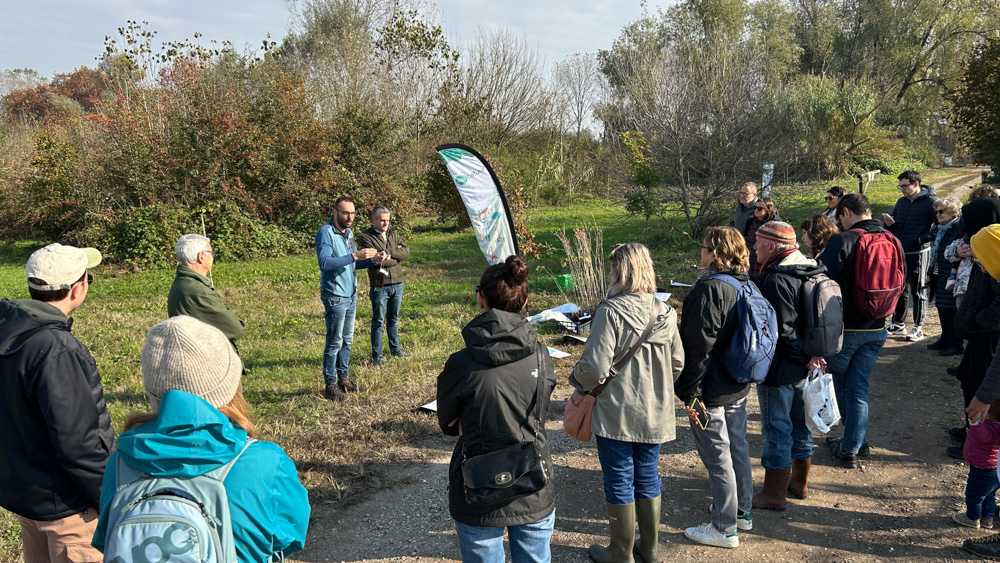
At the Crosara Oasis, we are continuing our environmental restoration work using native species. Despite the stony and sandy soil, the plants are growing well, thanks in part to careful maintenance over the summer. Maintenance continues to ensure the seedlings thrive.
In 2023, at the Crosara Oasis (VI), we planted new trees with the aim of creating an ecological corridor along the river, using local species such as willows, poplars and ash trees. These trees and shrubs are known for their ability to stabilise riverbanks, prevent erosion and provide an ideal habitat for local wildlife.
Last summer, we mowed the weeds here to ensure the plant roots had greater access to water, and we also carried out what is known as emergency irrigation – that is, irrigation carried out, if necessary, to ensure the seedlings have water.
During our visit, we observed that many of the plants planted last year have adapted well to the challenging soil and environmental conditions of the site, as Chiara explains: “Overall, the results have been good, with some plants showing greater growth thanks to their ability to adapt quickly to the stony ground and the proximity to the river.”