November 2024 – Updates from the forests of Adda Sud Park
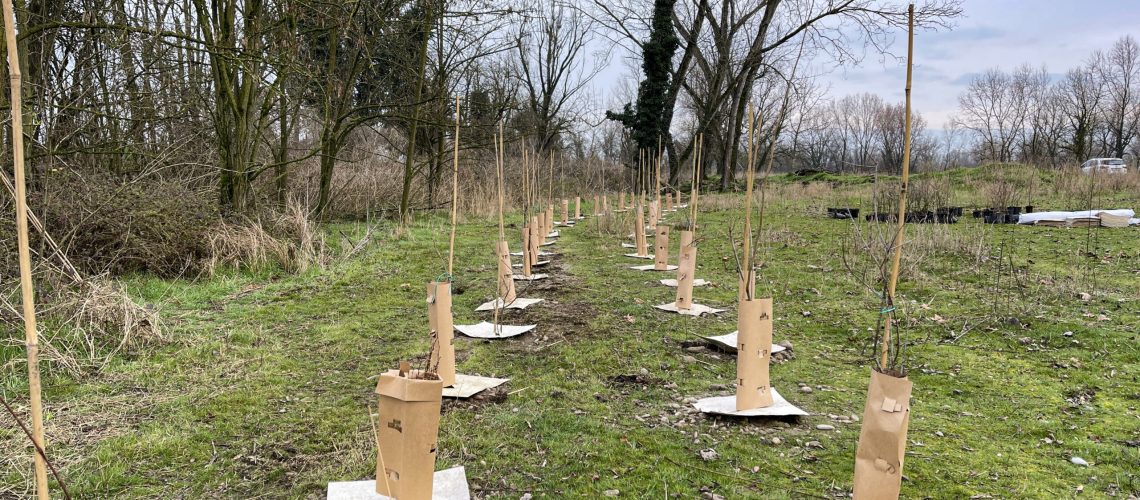
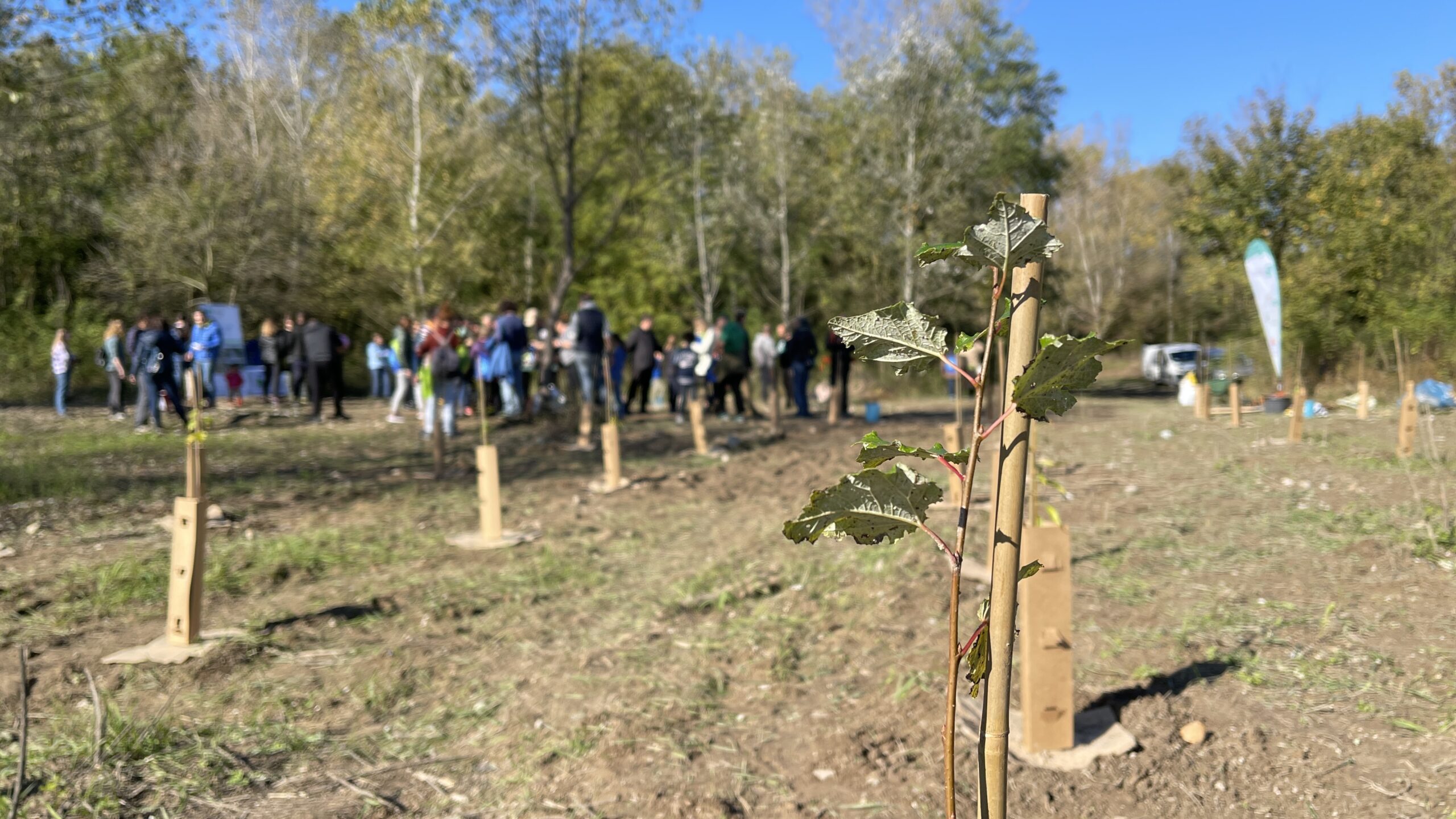
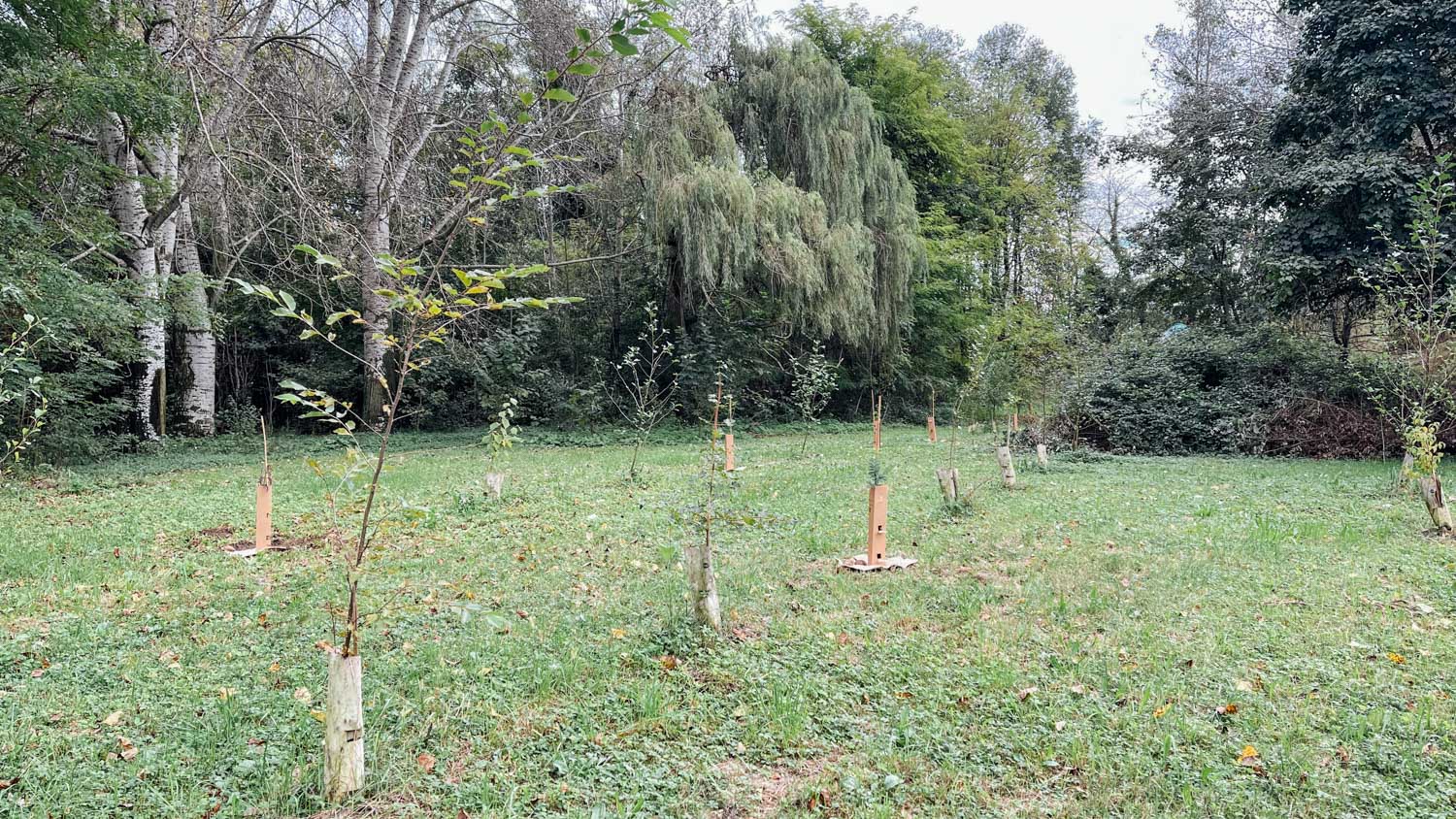
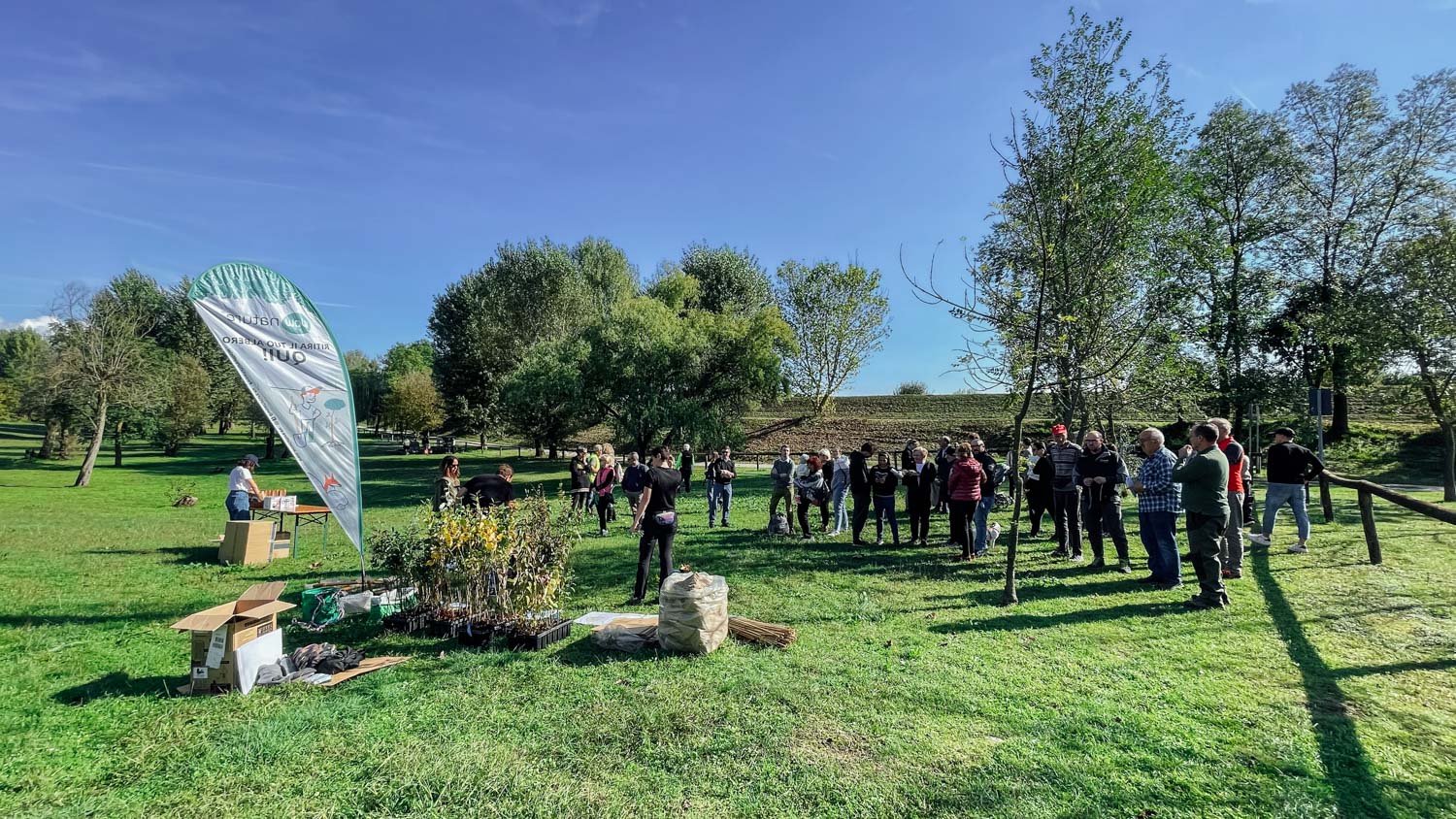
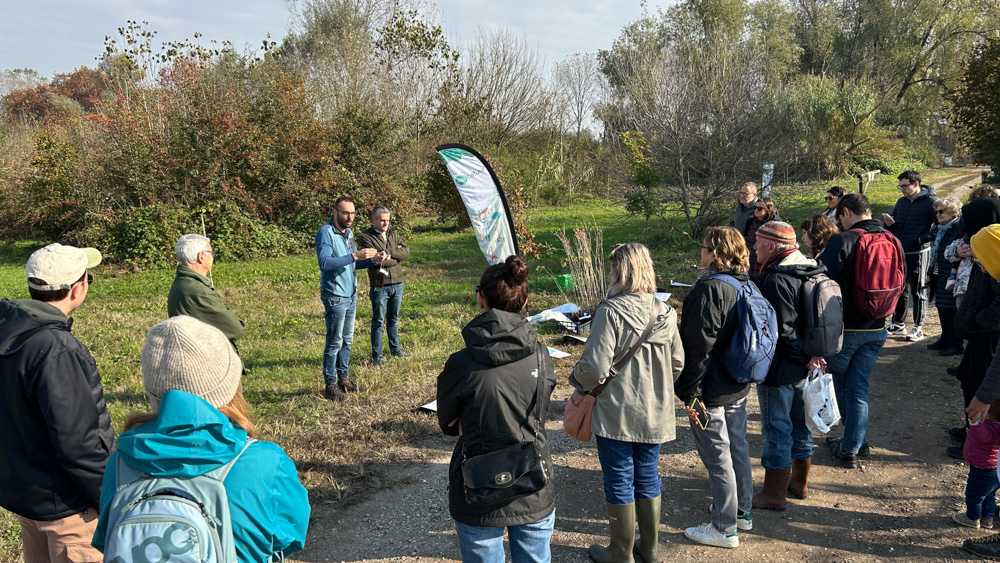
We returned to Adda Sud Park, to the beautiful riverbanks of Buffalora, to monitor our reforestation project. In March, we introduced new saplings to enrich the local vegetation. Despite the two floods that affected the area during the fall, the saplings are in excellent condition, ready to grow and strengthen the river ecosystem.
How are the plants doing?
Following our first visit in March, this latest visit in November saw the introduction of new plants to enrich and complete the previous planting. The plants planted last March are in excellent condition, despite having weathered two autumn floods. Thanks to their strategic location, even though they are in the floodplain, they have withstood the floods and are thriving, demonstrating the effectiveness of ecological design.
A project designed for biodiversity and sustainability
The project features the creation of a three-row hedge, composed mainly of berry-bearing shrubs, such as elderberry, wild apple, hawthorn, dogwood, and bloodberry. These species are essential for supporting local birdlife by providing food and shelter, and for encouraging the presence of pollinating insects, which play a crucial role in the ecosystem.
Bees and pollinators as bioindicators of environmental quality
An innovative aspect of the project is the use of pollinators as bioindicators of environmental quality. In fact, near the planting site, the University of Milan has set up an experimental station with apiaries, which are used to monitor the presence of heavy metals and pesticides in the honey and in the bees themselves. This approach provides accurate data on the health of the local ecosystem and allows for targeted interventions to protect it.
A refuge for wildlife and a resource for the environment
Among the species spotted in the area is the red-backed shrike, an insectivorous bird that indirectly benefits from the actions taken, thanks to improved conditions for pollinating insects. This project does not merely support individual species but impacts the entire food chain, enhancing the resilience of the river ecosystem.
Watch the update video