April 2025 – Updates from the Mezzaluna della Biodiversità
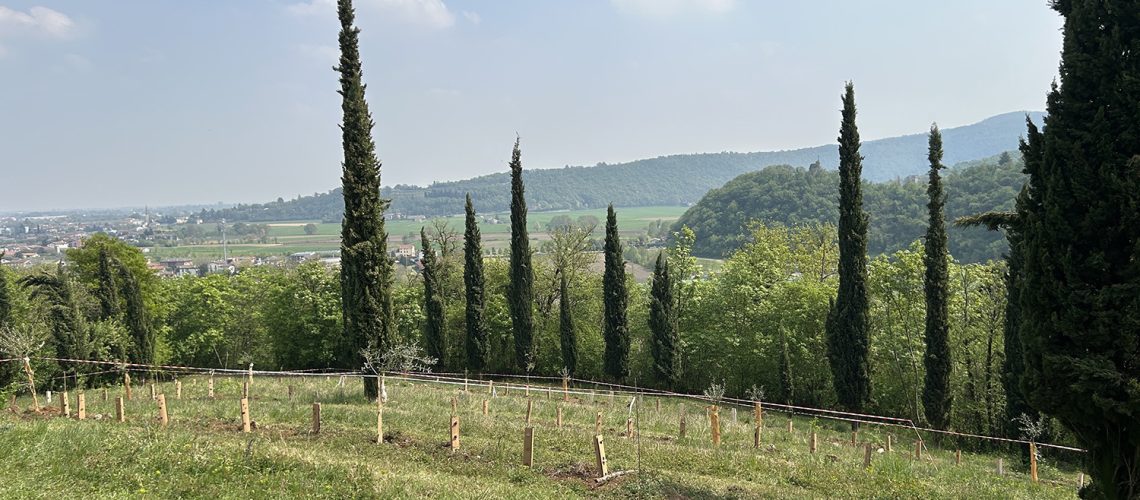
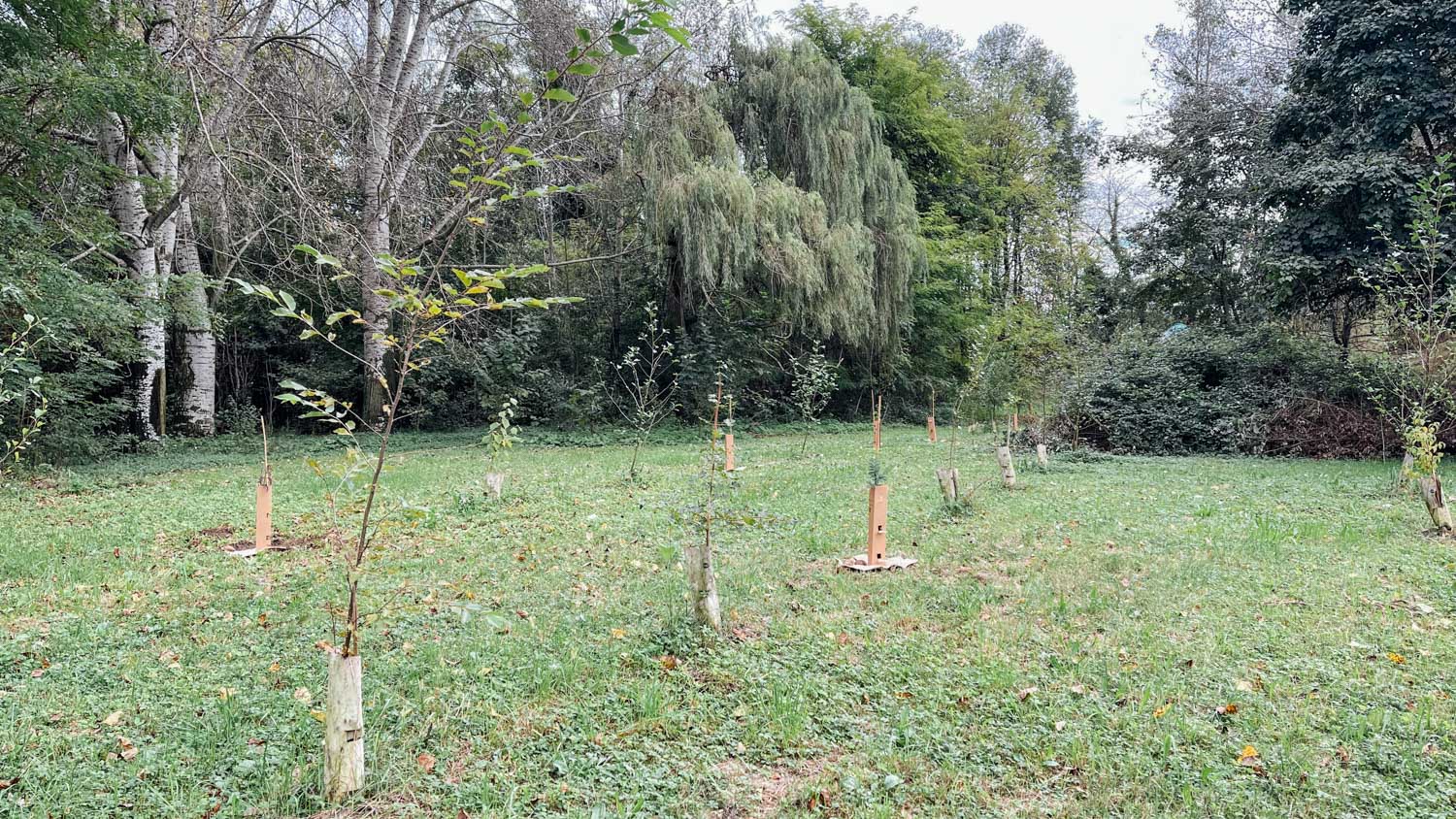
In the heart of the Colli Berici lies the Mezzaluna della Biodiversità, a reforestation project that aims to create a complex and diverse forest ecosystem. Here, planting follows a precise layout alternating fruit trees, forest trees and shrubs, to ensure a variety of species able to sustain itself over time.
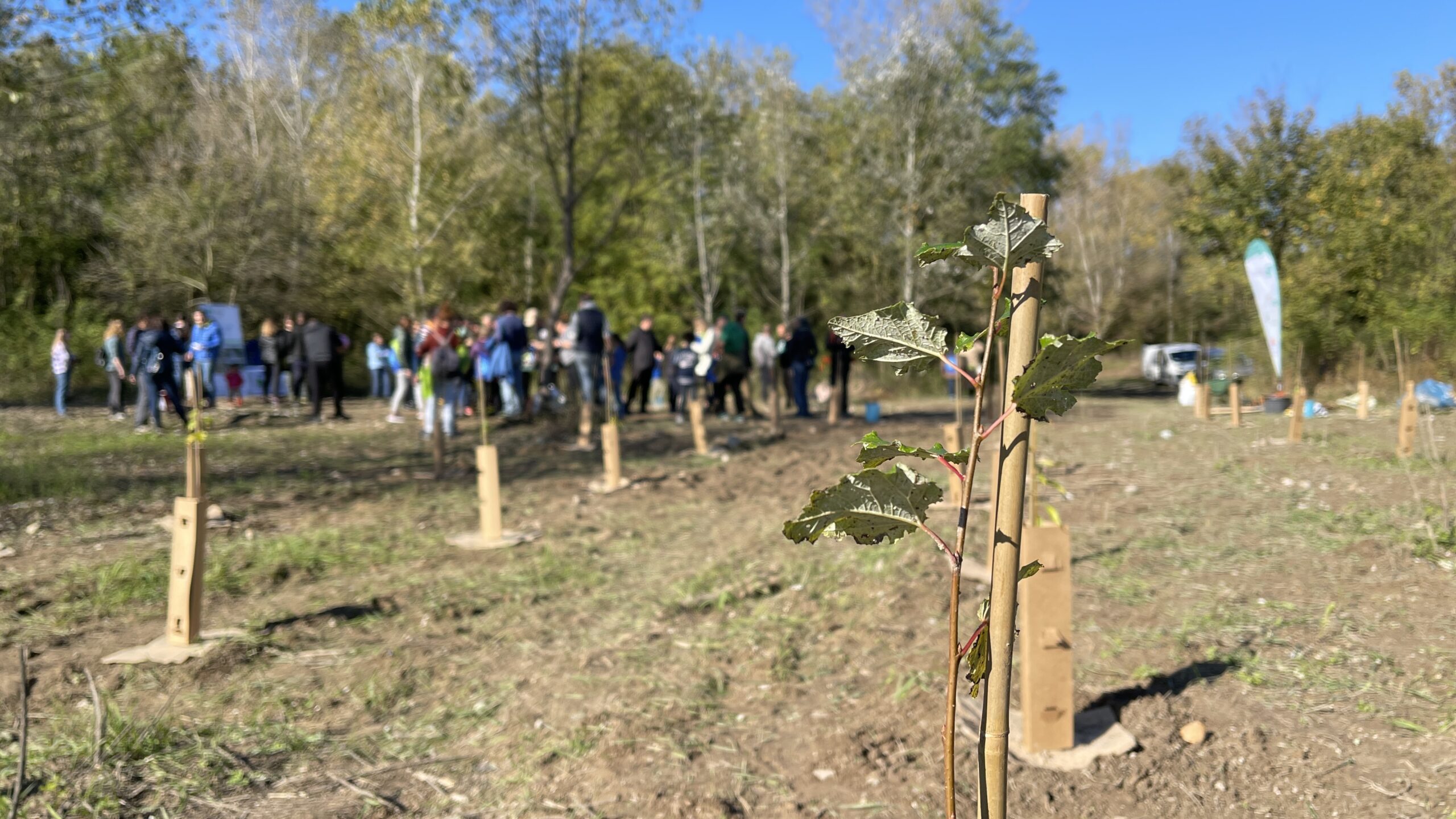
During the latest planting day for new trees, we monitored the plants put in the ground last autumn and found that they are in excellent condition and ready to face the summer.
Spring brings the first visible signs of biodiversity: in the rows between the trees, numerous species of herbaceous vegetation are growing, deliberately left unmown to encourage flowering and the presence of pollinators. Wild strawberries and wild rocket, buttercups and ramsons are just some of the plants observed in this period.
This careful management of vegetation is essential to provide food and shelter for insects, but also to support a varied wildlife. During our latest visit we spotted roe deer, hares and several birds that live permanently in the area.
Watch the update video
October 2024 – Updates from the Mezzaluna della Biodiversità
At the end of October 2024, we planted the first trees that companies and citizens adopted to turn the Mezzaluna della Biodiversità into reality, where a virtuous agroforestry project is taking shape. Watch the update video. In the province of Vicenza, in the Colli Berici hills, more precisely in Arcugnano, we are carrying out an agroforestry project, that is, a synergy between trees and shrubs and plants grown for agricultural production. The goal is to create a system in which food production does not come at the expense of nature, quite the opposite: the aim is to increase biodiversity, protect the soil, respect the territory and improve the landscape.
The combination of plant species also has a positive impact on insects, pollinators and wildlife, such as small birds, which will find shelter in the trees and sources of food. Trees and plants that are not treated with synthetic substances attract a larger number of insects, which in turn attract birds and other predators, helping to maintain the natural balance of habitats.