Have you ever wondered why we don’t plant trees in the middle of August or in the depths of winter?
Many people think that planting a tree is something you can do at any time, as if all you need to do is dig a hole and cover the roots. However, nature has its own rhythms, and ignoring them is the quickest way to jeopardise a plant’s life before it has even taken root.
Whether you want to plant a maple in your garden or contribute to an entire forest, there is a ‘golden moment’ that depends on precise biological balances. In this article, and in the video at the bottom of the page, we discover how geography and botany determine the best time to plant a tree.
The secret of dormancy
In a country like Italy, where climates and altitudes vary drastically, there is no single date that applies everywhere. However, there is a universal biological principle: dormancy. This is the phase in which sap flow slows down and metabolic activity is at a minimum, coinciding in deciduous trees with the falling of the leaves.
Intervening during this phase is crucial because it reduces transplant shock, allowing the tree to wake up in spring directly in its new home. But biology alone is not enough: to understand the best time to plant a tree, we must look at a map of the area.
From the Alps to Sicily: how geography dictates the rules
Planting seasons vary depending on the local environment and altitude. In high mountain areas, above 1,000 metres – such as in Val di Fiemme or Alta Badia – the planting window is extremely narrow: planting takes place in late spring, after the snow has melted, or in early autumn to avoid early frosts.
Moving down to the plains, the milder temperatures suggest bringing forward planting to the end of winter or late autumn, making use of seasonal rains to stabilise the roots before the summer heat. This is the approach we use in the Bosco delle Origini in Modena or the Bosco della Filatura in Ferrara.
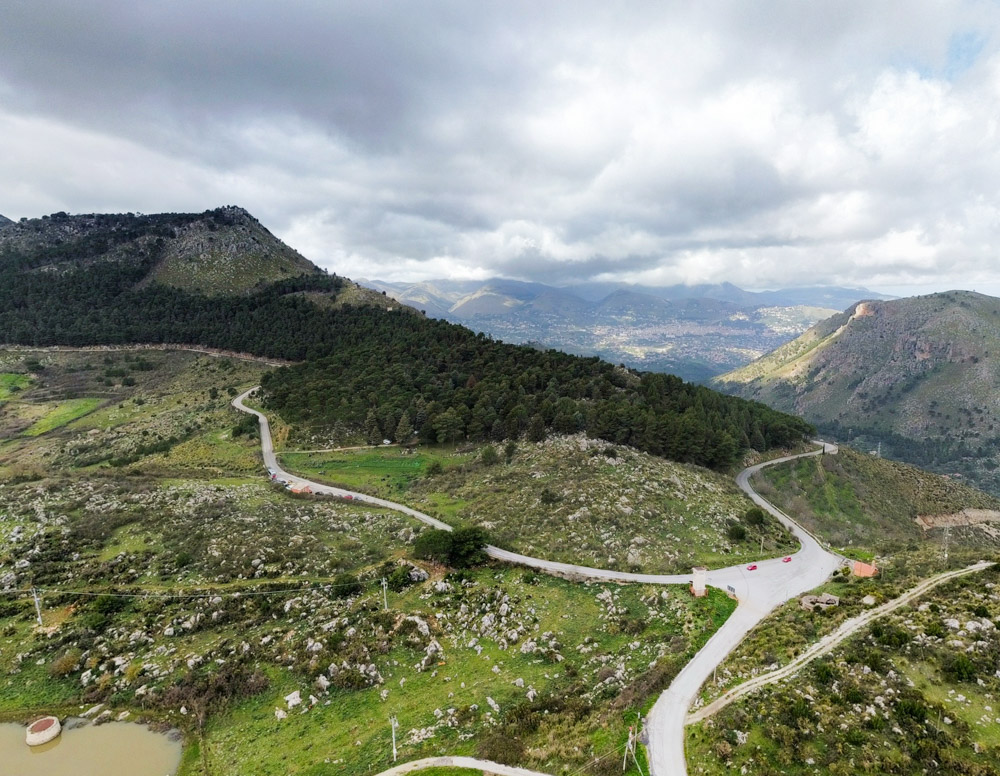
In the south and on islands such as Sicily, however, the ideal time shifts to the middle of winter: the absence of frost allows Mediterranean scrub plants, such as holm oak or carob, to take root thanks to the winter rains before the summer drought sets in.
In our international projects, such as in Burkina Faso or Vietnam, we plant exclusively during the rainy seasons. This is to allow the plant to become established before the hot periods.
Beyond the garden: the scientific management of a forest
Whilst caring for a tree in the garden is a constant and hands-on task, in large-scale reforestation projects the aim is for the ecosystem to be self-sustaining. This requires a scientific approach that goes far beyond simple planting: months of soil analysis, the selection of hardy native species, and the planning of post-planting maintenance, such as targeted mowing and irrigation. Only in this way can the planted tree develop into a resilient forest capable of enduring over time.
When is the best time to plant a tree?
Knowing when to take action is essential to avoid wasting energy and resources. Technical planning is what transforms a simple act of kindness into a measurable environmental impact.
Watch our YouTube video “When is the best time to plant a tree?”: understanding how geography and the climate crisis influence our choices is the first step towards taking informed action.
Would you like to be part of nature’s next “golden moment”? Don’t just watch. Adopt or gift a tree now; you can choose your favourite species and the spot you like best. You can plant it with us during our planting events. We look forward to seeing you in the forest to get our hands dirty together and build a more resilient future.