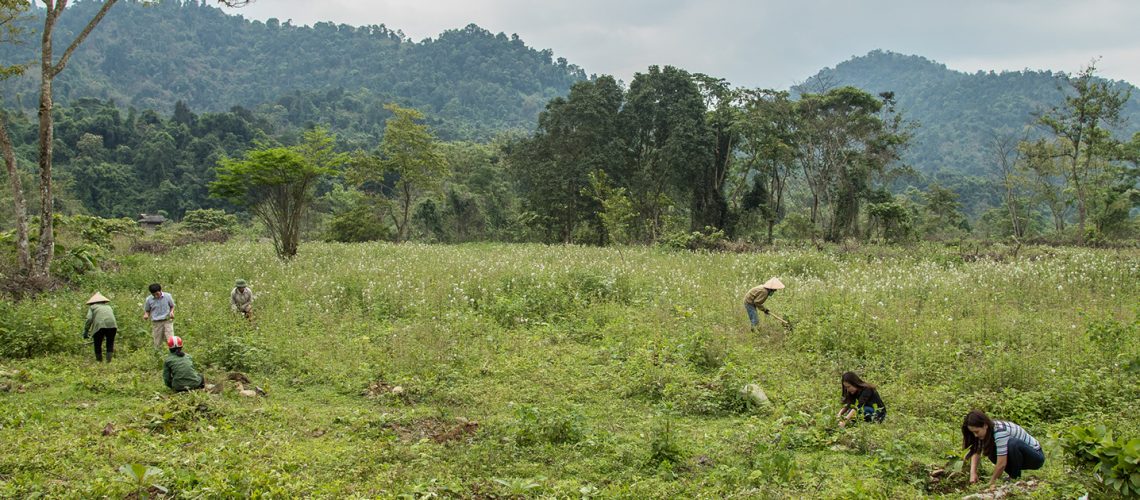
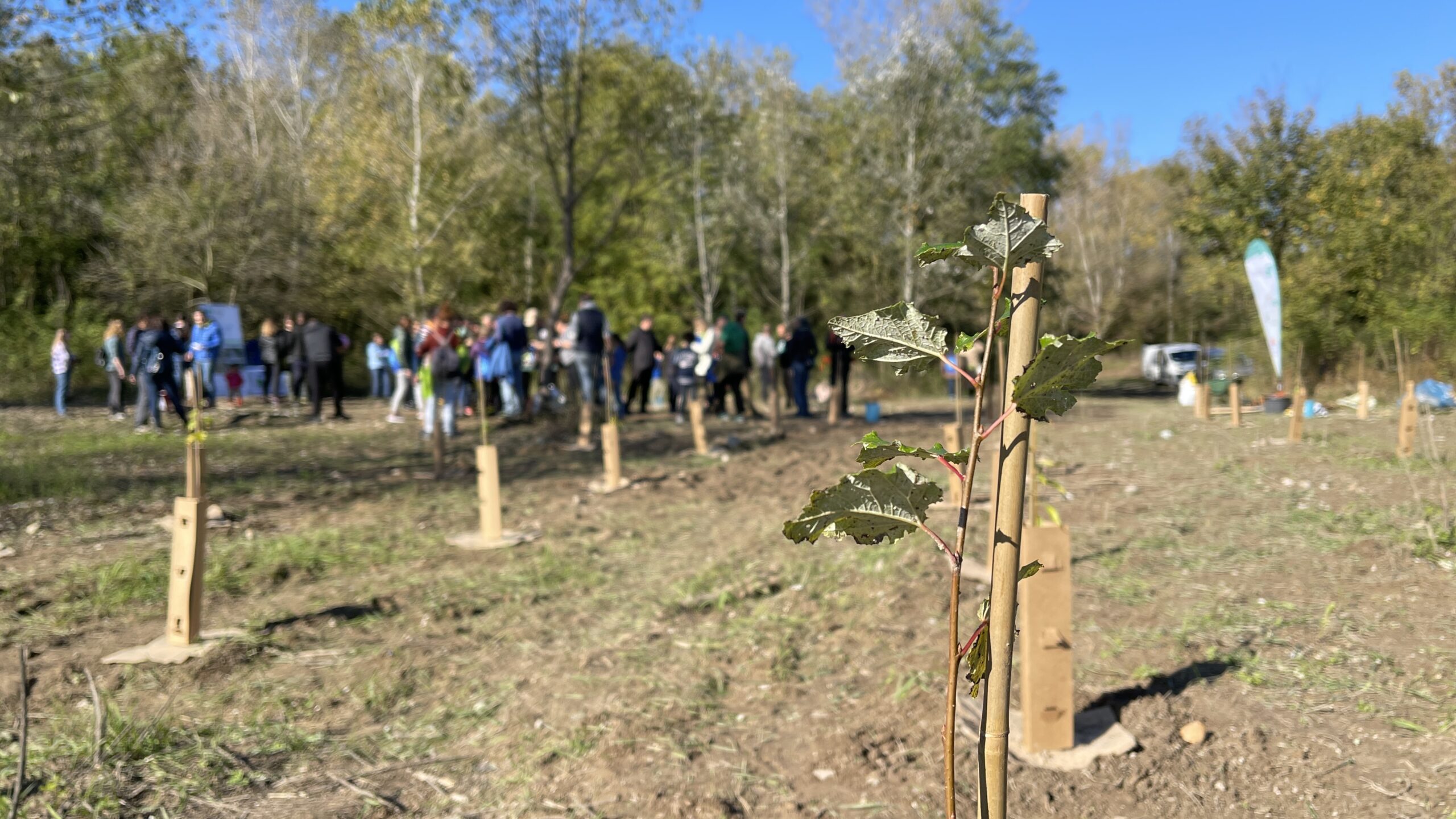
We went back to check the native species planted two years ago across more than two hectares of forest, in Huong Son. The Lim is growing well and has reached 1.8 metres: it stands near the river and has enough water. Other native species measure around 90 cm, compared with the 40-50 cm they were in the nursery two years ago.
Every year we clear the plants of invasive species, such as shrubs and weeds, to help the native ones develop. In two years we have planted 2,200 trees of native species, including the Lim, together with 800 rattan and medicinal plants for non-timber forest products: essential oil can be obtained from the medicinal herbs, with the first harvests expected next year. Another 3,300 native trees are planned.
The forest is protected day and night by 35 forest rangers, who patrol it to prevent illegal logging and deforestation. Thanks to good management, the forest maintains a 98% cover, stores 1.1 million tonnes of carbon and accumulates another 40,000 tonnes per year. It is also home to 1,400 species of flora and fauna: since logging was stopped in 2014, even endangered animals are starting to be seen again.
Watch the update video
October 2023 – Updates from the Wellbeing Forest
In central-northern Vietnam, in Huong Son, in Ha Tinh province, lies the Wellbeing Forest: over 20,000 hectares of FSC-certified natural forest, along the border with Laos, managed by the Huong Son State Forest Company and supported by the conservation and restoration project born from the collaboration with WOWnature. The name comes from the plants useful to local communities that the project introduces into the forest.
During our mission, together with the head of FSC Vietnam, we explained how the positive impacts of this forest are certified: on average, each hectare stores 200 tonnes of CO₂. This is possible first of all by protecting the forest from illegal logging and other forms of degradation and deforestation, such as agricultural use and road building; and then thanks to enrichment planting: in forests degraded in the past, where too much timber was cut, native species are replanted to rebuild the forest more quickly.
In those days we planted Teak Lim (also known as ironwood, literally “iron wood”), a tree with very hard wood that in the past was subject to very heavy logging and that will become the largest and most important species in the forest. The seedlings are planted in a scattered way in the areas that are regenerating, speeding up the recovery of the natural forest with species that would hardly manage to colonise these environments on their own. Together with hundreds of other seedlings, they support the regeneration of one of the most important natural forests in Northern Vietnam.